Jesus Christ and the Dead Sea Scrolls: The Identity of the Teacher of Righteousness
by
Karin Anderson
Copyright © 2026 Karin Anderson
All rights reserved.
No part of this publication may be reproduced, distributed, transmitted, or stored in any retrieval system, in any form or by any means, without prior written permission of the copyright holder, except for brief quotations used in reviews, scholarly discussion, or as otherwise permitted by law.
Scripture quotations are from the King James Version (KJV) of the Holy Bible, public domain.
References to the Dead Sea Scrolls, ancient Jewish writings, historical records, and archaeological discoveries are included for biblical, historical, and theological study. Translations and modern scholarly works remain subject to their respective copyright protections.
First Edition — 2026
ISBN: To be assigned
“Then opened he their understanding, that they might understand the scriptures.”
Luke 24:45 (KJV)
This is ready to place immediately after your front cover, before the Table of Contents and Preface.
PREFACE
The Sealed Prophecies and the Teacher of Righteousness
The discovery of the Dead Sea Scrolls brought to light a remarkable collection of ancient Jewish manuscripts containing biblical writings, prophetic commentaries, hymns, covenantal instructions, and revelations concerning the last days. Among these writings is the testimony of a mysterious figure known as the Teacher of Righteousness, to whom God revealed the mysteries of the words of His servants the prophets.
The identity of this Teacher is the central subject of this book.
The prophets of Israel foretold events whose complete meaning was not revealed to them. Daniel was commanded to seal his words until the time of the end, when understanding would be given to the wise.
Daniel 12:4 (KJV)
But thou, O Daniel, shut up the words, and seal the book, even to the time of the end: many shall run to and fro, and knowledge shall be increased.
Daniel 12:9–10 (KJV)
And he said, Go thy way, Daniel: for the words are closed up and sealed till the time of the end.
Many shall be purified, and made white, and tried; but the wicked shall do wickedly: and none of the wicked shall understand; but the wise shall understand.
The words were written, but their final meaning remained concealed until the appointed time.
Isaiah also described a book whose contents were sealed and a future restoration of understanding.
Isaiah 29:11 (KJV)
And the vision of all is become unto you as the words of a book that is sealed, which men deliver to one that is learned, saying, Read this, I pray thee: and he saith, I cannot; for it is sealed:
Yet Isaiah declared that the time would come when the sealed revelation would be understood.
Isaiah 29:18 (KJV)
And in that day shall the deaf hear the words of the book, and the eyes of the blind shall see out of obscurity, and out of darkness.
This restoration of understanding is followed by the promise that the teachers would no longer remain hidden.
Isaiah 30:20–21 (KJV)
And though the Lord give you the bread of adversity, and the water of affliction, yet shall not thy teachers be removed into a corner any more, but thine eyes shall see thy teachers:
And thine ears shall hear a word behind thee, saying, This is the way, walk ye in it, when ye turn to the right hand, and when ye turn to the left.
The Isaiah Pesher connects these prophecies with the Zadokite priests, whose authority and teachings occupy an important place in the Dead Sea Scrolls.
Isaiah 29–30 also describes the gathering of nations against Jerusalem, their defeat, and the restoration of the land. The War Scroll (1QM) similarly describes a final conflict between the Sons of Light and the Sons of Darkness, ending in divine victory.
The restoration of Israel, the return of righteous instruction, and the unveiling of prophetic understanding are therefore connected within the larger biblical narrative.
The Preservation of Sacred Writings
The preservation of divine revelation is a recurring theme in ancient Jewish literature.
The Book of Jubilees describes sacred knowledge passing from Enoch through successive generations. Noah preserves writings concerning healing and delivers them to Shem. Abraham refers to the books of his forefathers, while Jacob entrusts inherited writings to Levi.
This tradition establishes a connection between the preservation of sacred knowledge and the priestly inheritance.
The Testament of Moses describes Moses instructing Joshua to preserve sacred writings in earthen vessels until the appointed time of divine visitation.
The discovery of ancient manuscripts preserved in jars near the Dead Sea gives this tradition particular significance.
The Dead Sea Scrolls contain more than copies of biblical books. They preserve interpretations of prophecy, explanations of the covenant, expectations of the Messiah, descriptions of the heavenly priesthood, and instructions concerning the returning tribes of Israel and the final conflict between righteousness and wickedness.
No single manuscript contains the entire explanation. The teachings are distributed among the Pesharim, the Damascus Document, the Community Rule, the Thanksgiving Hymns, the Melchizedek Scroll, the Messianic Apocalypse, and other writings.
Together, they provide the foundation for examining the identity of the Teacher of Righteousness.
God Raised Up the Teacher
The Damascus Document declares that the covenant community wandered without understanding until God intervened.
Damascus Document (CD I:9–11)
They were like blind men, and like those who grope for the way for twenty years. And God considered their deeds, because they sought Him with a perfect heart, and He raised up for them a Teacher of Righteousness to guide them in the way of His heart.
The distinction is important.
The community did not originally possess the understanding necessary to interpret God’s purposes. Its members searched for the way, but their priestly inheritance alone did not provide the answers.
God raised up the Teacher of Righteousness to give them the understanding they lacked.
The Habakkuk Pesher explains the source of his knowledge.
Habakkuk Pesher (1QpHab VII:4–5)
Its interpretation concerns the Teacher of Righteousness, to whom God made known all the mysteries of the words of His servants the prophets.
The Teacher was not simply an instructor in the Law. He possessed the understanding of prophetic mysteries that had remained concealed from earlier generations.
This testimony establishes the question that governs the entire book:
Who was the Teacher of Righteousness to whom God revealed the mysteries of the prophets?
Following His resurrection, Jesus Christ did precisely what the Habakkuk Pesher attributes to the Teacher.
Luke 24:27 (KJV)
And beginning at Moses and all the prophets, he expounded unto them in all the scriptures the things concerning himself.
Luke 24:45 (KJV)
Then opened he their understanding, that they might understand the scriptures.
The prophets had written of the Messiah. Jesus revealed the meaning of their words.
The Habakkuk Pesher declares that God made known the mysteries of the prophets to the Teacher of Righteousness. The Gospel of Luke declares that Jesus opened the Scriptures to His disciples.
This book identifies Jesus Christ as the Teacher of Righteousness and examines the Dead Sea Scrolls as testimony concerning His identity, ministry, priesthood, suffering, and revelation of the mysteries of the prophets.
INTRODUCTION
The Problem with the Hasmonean Theory
The identity of the Teacher of Righteousness has remained one of the most important questions surrounding the Dead Sea Scrolls.
The prevailing scholarly reconstruction places the Teacher and the origins of the Qumran covenant community within the Hasmonean period, following the Maccabean Revolt of the second century B.C. In this reconstruction, the Wicked Priest mentioned in the Habakkuk Pesher is generally identified with a Hasmonean ruler or high priest who persecuted the Teacher.
Yet this identification presents a significant historical problem: the hereditary Zadokite priesthood had already been displaced from Jerusalem, and Onias IV had established a priestly sanctuary in Egypt.
The historical circumstances surrounding the removal of the Zadokite priesthood, the rise of the Hasmoneans, and the establishment of the Temple of Onias must therefore be examined before the Teacher of Righteousness and the Wicked Priest can be properly identified.
The Fall of the Zadokite Priesthood
The crisis began during the Seleucid period, when Antiochus IV Epiphanes (175–164 B.C.) interfered in the religious and political affairs of Judea.
His policies disrupted the traditional priesthood and culminated in the desecration of the Jerusalem Temple in 167 B.C., provoking the Maccabean Revolt.
The books of Daniel, 1 Maccabees, and 2 Maccabees preserve the historical and prophetic setting of these events.
The struggle was not simply a conflict between the Jewish people and their Seleucid rulers. It also involved a profound disruption of the hereditary high priesthood and the religious authority of Jerusalem.
Onias III, a high priest of the traditional priestly line, was removed from office and subsequently murdered. The resulting struggle over the priesthood created the circumstances in which Onias IV, heir to the legitimate Zadokite line, departed for Egypt.
Rather than remain in Jerusalem, where the priesthood had become subject to political interference, Onias sought refuge under the protection of the Ptolemaic rulers.
The departure of Onias IV represented a decisive separation between the hereditary Zadokite priesthood and the priestly establishment that subsequently governed Jerusalem.
When the Maccabeans defeated the Seleucid forces and rededicated the Jerusalem Temple in 164 B.C., they did not restore the high priesthood to Onias IV.
Instead, the high priesthood eventually passed into the hands of the Hasmonean dynasty.
The Maccabean victory restored Jewish worship in Jerusalem, but it did not restore the displaced Zadokite succession.
The priestly line associated with Onias had established itself in Egypt, where it continued to maintain its religious identity and worship.
Josephus and the Departure of Onias to Egypt
The Jewish historian Flavius Josephus preserves an extraordinary account of Onias and his decision to establish a temple in Egypt.
In Antiquities of the Jews, Book XIII, Chapter 3, Josephus describes the circumstances surrounding Onias’s departure and his petition to the Egyptian rulers.
Josephus writes:
When this Onias saw that Judea was oppressed by the Macedonians and their kings, out of a desire to purchase to himself a memorial and eternal fame he resolved to send to king Ptolemy and queen Cleopatra, to ask leave of them that he might build a temple in Egypt like to that at Jerusalem.
— Josephus, Antiquities of the Jews, XIII.3.1 (§62)
Onias did not simply flee into Egypt and abandon his priestly calling. He sought permission to establish a sanctuary patterned after the Temple in Jerusalem, where worship could continue under the protection of the Egyptian monarchy.
Onias then appealed directly to the prophecy of Isaiah:
For the prophet Isaiah foretold that there should be an altar in Egypt to the Lord God; and many other such things did he prophesy relating to that place.
— Josephus, Antiquities of the Jews, XIII.3.1 (§§63–68), excerpt
The prophecy appears in Isaiah 19.
Isaiah 19:19 (KJV)
In that day shall there be an altar to the LORD in the midst of the land of Egypt, and a pillar at the border thereof to the LORD.
Onias understood the establishment of a temple in Egypt as the fulfillment of a prophecy already recorded in Scripture.
The sanctuary was therefore presented not merely as a political necessity but as an undertaking grounded in the prophetic word of Isaiah.
The Temple at Leontopolis
Josephus identifies the proposed temple with Leontopolis, in the Heliopolitan region of Egypt, and associates it with a ruined sanctuary in the district of Bubastis.
He records that Ptolemy and Cleopatra granted Onias permission to establish the sanctuary after considering his petition and its appeal to Isaiah.
The Temple of Onias was more than an alternative place of worship. It provided a sanctuary in which the displaced priestly line could continue its traditions independently of the authorities governing Jerusalem.
The distinction between the hereditary Zadokite priesthood and the later Hasmonean establishment is essential.
The Hasmoneans gained control of Jerusalem following the Maccabean struggle, but they did not return the high priesthood to Onias IV.
The sanctuary at Leontopolis remained in use for generations, until its closure by Roman authority following the destruction of Jerusalem in A.D. 70.
Thus, the Egyptian sanctuary was not a temporary refuge established for a handful of displaced priests. It became an enduring center of Jewish religious life outside Jerusalem.
The Temple of Onias preserved an alternative priestly tradition at a time when the Jerusalem high priesthood had become inseparable from political authority.
The Historical Problem with Identifying the Wicked Priest as a Hasmonean
This history raises a fundamental question concerning the identification of the Teacher of Righteousness and the Wicked Priest.
If the hereditary Zadokite priestly succession had departed Jerusalem and established itself in Egypt, why should the historical setting of the Teacher of Righteousness be confined to the Hasmonean priesthood in Jerusalem?
The Habakkuk Pesher does not provide the personal name of the Wicked Priest. His identification with a particular Hasmonean ruler depends upon a reconstruction of historical circumstances.
The same is true of the proposed dates for the Teacher of Righteousness.
The historical setting must therefore be examined without assuming that the accepted identification has already been established.
The Temple of Onias provides a different starting point: the displacement of the Zadokite priesthood, its preservation in Egypt, and the continuing conflict over legitimate priestly authority.
This is the historical foundation upon which the following chapters proceed.
The Evidence of the Scrolls
The argument of this book does not depend upon a single manuscript or an isolated resemblance between the Dead Sea Scrolls and the New Testament.
It brings together the priestly history preserved by Josephus, the prophecies of Isaiah and Daniel, the messianic works described in 4Q521, the Jubilee proclamation in 11Q13, the conflict between the heavenly rulers in the Vision of Amram, the chronology of the Damascus Document, and the mysteries of the prophets revealed in the Habakkuk Pesher.
The central claim is that these writings, examined together with the Gospel record, identify Jesus Christ as the Teacher of Righteousness.
The question is not merely whether the Qumran writings resemble Christianity. It is whether the identity, authority, mission, and revelation attributed to the Teacher correspond to Jesus Christ.
The chapters that follow examine that evidence, beginning with the historical displacement of the Zadokite priesthood and the establishment of the Temple of Onias in Egypt.
The identity of the Teacher of Righteousness must be determined by the testimony of the writings themselves, the historical circumstances surrounding the priesthood, and the fulfillment of the prophetic Scriptures.
Preface
The Isaiah Pesher, the Coming War Against Israel, and the Zadokite Priests
- Isaiah 29–30: The War Against Jerusalem and the Return of the Teachers
- Daniel’s Sealed Prophecies and the Time of the End
- Enoch, Noah, and the Transmission of Sacred Writings
- The Testament of Moses and the Preservation of Scrolls in Earthen Vessels
- God Raised Up a Teacher of Righteousness
- The Teacher of Righteousness and the Mysteries of the Prophets
- The Dating of the Dead Sea Scrolls and the Hasmonean Theory
- Objections to the Scholarly Consensus
- The Restricted Scrolls Controversy
Chapter 1 — History
The Temple of Onias, the Zadokite Priesthood, and the Childhood of Jesus
- Josephus and the Temple of Onias in Egypt
- Isaiah 19: The Altar in Egypt and the Coming Savior
- The Falling of the Idols in Jewish and Christian Traditions
- Leontopolis, Bubastis, and the Holy Family
- The Zadokite Priesthood and the Upbringing of Jesus
- The Safed Narrative and the Alexandrian Scroll
- Conclusion: The Significance of Leontopolis
Chapter 2 — The Seed of the Woman
Celestial Signs of the Messiah
- Genesis 3:15 and the First Messianic Prophecy
- Eve, Virgo, and the Promised Child
- Joseph, Mary, and the Davidic Bloodline
- Isaiah 7: The Sign in the Depths and the Heavens
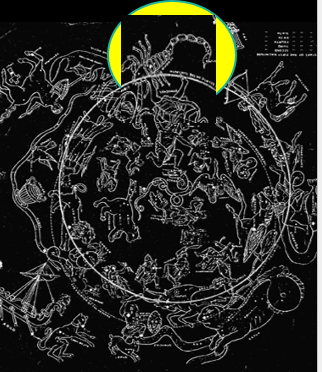
- The Sphinx and the Celestial Journey of Man
- Raleigh’s History of the World and the Woman Clothed with the Sun
- The Timing of the Messiah’s Birth
- Revelation 12: The Dragon and the Child
- Joshua, the Branch, and the Dragon at His Right Hand
- The Serpent, Hydra, and Enmity
- Argo: The Ship and the Company of the Redeemed
Chapter 3 — Exclusivity
The Messianic Apocalypse (4Q521): The Signs That Identify Jesus
- Why 4Q521 Matters for Essene Recognition
- Heaven and Earth Obey the Messiah
- Liberty to the Captives and Sight to the Blind
- The Raising of the Dead
- Good News Preached to the Poor
- John the Baptist’s Question to Jesus
- Comparison of 4Q521 with the Gospel Record
- The Unique Messianic Works of Jesus
Chapter 4 — Timing and Identity
The Melchizedek Scroll (11Q13): Liberty to the Captives and the Jubilee Prophecy
- The Melchizedek Scroll and the Appointed Time
- Liberty to the Captives
- Isaiah 61 and the Proclamation of the Jubilee
- Jesus Announces the Fulfillment of Scripture
- The Nine Jubilees and Messianic Chronology
- Daniel’s Prophecy and the Coming Messiah
- Jesus’ Entry into Jerusalem
- The Heavenly Priesthood of Melchizedek
Chapter 5 — The Vision of Amram
The Two Heavenly Rulers, Melchizedek, and the Adversary
- The Vision of Amram and the Conflict Between Light and Darkness
- Melchizedek and Melki-Resha
- The King of Righteousness and the King of Wickedness
- Belial and the Opposition to the Messiah
- The Wicked Priest and the Teacher of Righteousness
- The Maccabean Identification and Its Historical Problems
- Conclusion: The Maccabean Identification Is a Reconstruction, Not a Name Preserved in the Scroll
Chapter 6 — The Damascus Document
The Teacher of Righteousness, the Man of Lies, and the Forty-Year Countdown
- God Raised Up a Teacher of Righteousness
- The Forty-Year Countdown
- The Man of Lies and Judas Iscariot
- Judas and the Son of Perdition
- The Covenant with Death
- The Thirty Pieces of Silver
- The Foundation Stone and the Refuge of Lies
- The Essene Calendar and the Crucifixion
- The Talmud and the Forty-Year Sign
- Conclusion of Chapter 6
Chapter 7 — The Scrolls Jesus Wrote
Did Jesus Christ and His Disciples Author or Transmit the Writings Found at Qumran?
- The Teacher of Righteousness and the Mysteries of the Prophets
- Daniel and the Sealed Prophecies
- Jesus Opens the Scriptures to His Disciples
- The Habakkuk Pesher and the Revelation of the Mysteries
- The Prophetic Commentaries
- The Transmission of the Scrolls
- Conclusion: The Teacher Revealed the Mysteries
Conclusion of the Book
The Seven Chapters and the Identification of Jesus Christ as the Teacher of Righteousness
- The Zadokite Priests and the Childhood of Jesus
- The Seed of the Woman and the Celestial Signs
- The Messianic Apocalypse and the Works of Jesus
- The Melchizedek Scroll and the Proclamation of Liberty
- The Heavenly Priesthood and the Prophetic Chronology
- The Damascus Document and the Forty-Year Countdown
- The Habakkuk Pesher and the Mysteries Revealed to the Teacher
- The Final Convergence of the Evidence
Final Conclusion — Read the Dead Sea Scrolls
- Read the Damascus Document
- Read the Habakkuk Pesher
- Read the Thanksgiving Hymns
- Read the Melchizedek Scroll
- Read the Messianic Apocalypse
- Read the Songs of the Sabbath Sacrifice
- Read the Scrolls Alongside the Gospels, Epistles, and Revelation
Glossary
Biblical, Historical, Archaeological, and Celestial Terms
Bibliography
Ancient Sources, Dead Sea Scrolls, Biblical Commentaries, Historical Works, and Modern Scholarship
Chapter 1 -History
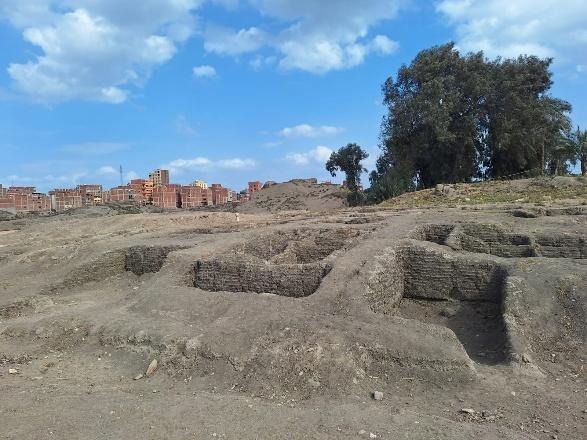
The picture above is of the mound of Judah. The place where Onias built his Temple
Book 7, Chapter 10, §§2–4
Identifies the remains of the Templw at Leontopolis seen above. It tells us the Temple had a brick wall around it and stone, and Paulinus destroyed it. It was burnt it to the ground. The burnt remains are seen in the above picture with the wall of bricks still standing
THE ORDER
Caesar …gave orders to Lupus to demolish that Jewish temple which was in the region called Onion, ..
THE GRANT
Ptolemy granted Onias land about 180 furlongs from Memphis, in Leontopolis (also called Bubastis) the district called Heliopolis. There Onias built a fortress and a temple, …The temple was surrounded by a brick wall with stone gates.
THE DESTRUCTION
… the entire temple was encompassed with a wall of burnt brick, though it had gates of stone. …
…Lupus, the governor of Alexandria, upon the receipt of Caesar’s letter, came to the temple… when he had shut up the gates, he made it entirely inaccessible, insomuch that there remained no longer the least footsteps of any Divine worship that had been in that place.
Purpose of the Temple
Onias believed this prophecy authorized the establishment of a Jewish temple in Egypt. The Temple became more than a place of worship. It became the center of a Zadokite community preserving priestly traditions outside the authority of Jerusalem. For generations, this community maintained its identity while awaiting the fulfillment of God’s promises. The significance of this development cannot be overstated. The existence of a legitimate priestly alternative outside Jerusalem challenges many assumptions concerning the historical setting of the Dead Sea Scrolls.
Josephus records that Onias requested to build a Temple in Leontopolis, citing the prophet Isaiah, who wrote:
“In that day shall there be an altar to the LORD in the midst of the land of Egypt, and a pillar at the border thereof to the LORD.”
— Isaiah 19:19, KJV
Josephus adds the important words:
“And many other things.”
Isaiah 19:20 declares:
“And it shall be for a sign and for a witness unto the LORD of hosts in the land of Egypt: for they shall cry unto the LORD because of the oppressors, and he shall send them a saviour, and a great one, and he shall deliver them.”
The prophecy connects the altar in Egypt with the future deliverance of those who cry unto the Lord.
The Isaiah prophecy also spoke of the Lord entering Egypt and of idols trembling at His presence.
“The idols of Egypt shall be moved at his presence.”
— Isaiah 19:1, KJV, excerpt
The Temple site Onias chose stood before fallen idols, and history records that when the Holy Family arrived at this very place, the idols fell.
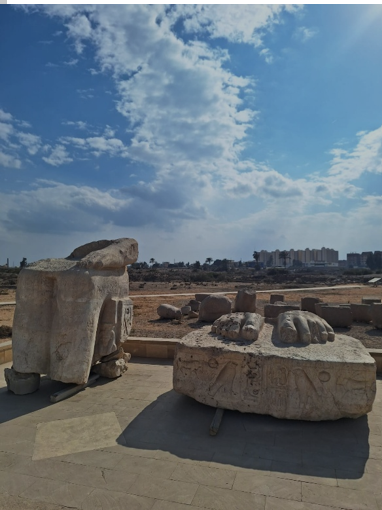
Figure 2. Fallen Egyptian sculptural remains next to the Onias Temple.
The second photograph shows fallen or displaced Egyptian stone sculpture, including a monumental hand and inscribed blocks. These remains make the prophecy of Isaiah 19:1 visually compelling, connecting the Zadokite Temple with fallen idols.
The prophetic case rests on a second body of testimony.
Menachot 109b and Rashi connect Onias’s altar with Isaiah 19:19;
Pseudo-Matthew and the Arabic Infancy Gospel describe idols falling before Jesus; and Coptic accounts preserve the Holy Family’s journey through Egypt.
Rashi’s commentary on Isaiah 19:1 explicitly addresses the trembling of Egypt’s idols, but an important distinction is that his reference to the Temple of Onias appears later, in his commentary on Isaiah 19:18–19, rather than in his explanation of verse 1 itself.
1. Rashi on Isaiah 19:1 — The trembling idols
Isaiah 19:1 (KJV):
“Behold, the LORD rideth upon a swift cloud, and shall come into Egypt: and the idols of Egypt shall be moved at his presence, and the heart of Egypt shall melt in the midst of it.”
Rashi explains the trembling of the idols as a response to the Lord’s coming into Egypt. His commentary treats the movement of the idols as part of the prophecy of divine judgment upon Egypt.
This establishes that the trembling idols are not simply an invention of later Christian infancy traditions; they are already present in Isaiah’s prophecy and recognized in Jewish biblical commentary.
2. Rashi connects the prophecy to the Temple of Onias
The particularly significant discovery is that in the Chabad edition of Rashi on Isaiah 19:1, Rashi’s extended comment printed beneath the words “and the idols of Egypt shall quake from before Him” proceeds directly to the prophecy of the five cities and the Egyptian altar.
He writes:
“Some of our Sages expounded it in the tractate Menahoth (109b) as referring to the altar of the temple of Onias the son of Simon the Just, who fled to Egypt and built an altar there.”
This is indeed located under Isaiah 19:1 in the Chabad presentation, although other editions place the same comment under Isaiah 19:18.
3. Rashi’s interpretation of the trembling
In the Judaica Press translation preserved by Sefaria, Rashi explains:
“They will have no power to save their people from the messengers of the king of Assyria.”
He also relates Isaiah’s prophecy to Exodus 12:12, where God announces judgment against the gods of Egypt.
Thus, Rashi recognizes both the trembling of Egypt’s idols and the establishment of an altar to the Lord within his treatment of Isaiah 19, while understanding the trembling primarily in the context of divine judgment.
4. Menachot 109b confirms the connection
The Babylonian Talmud records Onias establishing an altar in Egypt and explicitly cites Isaiah 19:19 as its scriptural justification.
Rashi’s commentary places the trembling of Egypt’s idols and the Temple of Onias within the same prophetic chapter, and in one traditional presentation within the same commentary entry. The Talmud independently identifies Onias’s altar with Isaiah’s Egyptian altar prophecy.
Neither source explicitly states that the idols physically collapsed when Onias founded the temple. That detail belongs to the separate Christian traditions concerning the arrival of Jesus in Egypt.
Rashi’s commentary on Isaiah 19:1 explicitly addresses the trembling of Egypt’s idols, but an important distinction is that his reference to the Temple of Onias appears later, in his commentary on Isaiah 19:18–19, rather than in his explanation of verse 1 itself.
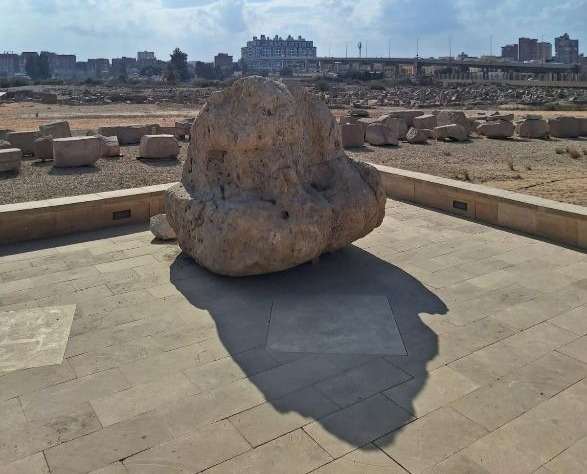
Figure 3. Additional fallen Egyptian sculptural remains next to the Onias Temple.
Jewish texts support that idols fell at the site of Onoais Temple. Christian witness links the Lord’s coming into Egypt, and the fall of idols.
The Falling of the Idols in Christian Tradition
Matthew 2:13–15 records the Holy Family’s flight into Egypt and connects it with Hosea 11:1:
“Out of Egypt have I called my son.”
Apocryphal and Coptic accounts of the Holy Family’s journey describe pagan idols falling before the infant Christ.
Of particular importance is the tradition that the Egyptian idols fell when the Christ Child entered Egypt, fulfilling Isaiah 19:1.
Five important ancient texts
1. Arabic Infancy Gospel
Chapters 9–25 describe the Holy Family traveling through Egypt, encountering idols, healing the sick, and performing miracles.
Chapter 10 describes an Egyptian idol announcing the arrival of the true Son of God before falling to the ground.
2. Gospel of Pseudo-Matthew
Chapters 22–24 describe Mary entering an Egyptian temple with Jesus, where the idols fall and break. The narrative expressly connects the event to Isaiah 19:1.
3. Vision of Theophilus
Especially important for the Holy Family’s route. Mary appears to Theophilus, Patriarch of Alexandria, and recounts the family’s journey through Egypt.
4. History of Joseph the Carpenter
Preserved in Coptic and Arabic, this work recounts Joseph’s life, his relationship with Mary, and the childhood of Jesus. It is particularly useful for studying Egyptian Christian traditions concerning Joseph.
5. Coptic homilies on the Flight into Egypt
Traditions associated with Zacharias of Sakha and Cyriacus of Bahnasa describe the journey as a fulfillment of prophecy and a purification of Egypt from idolatry.
Leontopolis, the Zadokite Priesthood, and the Upbringing of Jesus
Two Cities Two Locations, Two Important Questions
I. Historical and Documentary Evidence
Tell Basta: The Ancient City of Bubastis
Its ancient name, Per-Bastet, means the House of Bastet.
Modern pilgrimage authorities identify Tell Basta as the location of this event, although the precise archaeological position of the fallen statues has not been established.
Tell el-Yahudiya: The Sanctuary of Onias
Tell el-Yahudiya, southwest of Zagazig, is traditionally identified with the Temple of Onias, established by the Oniad priesthood during the second century BC. Also worshipped Baset.
The Egyptologist Flinders Petrie also documented evidence of Bast worship at Tell el-Yahudiya in Hyksos and Israelite Cities (1906), including a representation of an official holding a shrine of the goddess.
1. Josephus identifies the sanctuary with Bubastis
In Antiquities of the Jews 13.3.2 (§70), Josephus preserves the response of Ptolemy and Cleopatra to Onias:
“We have read thy petition, wherein thou desirest leave to be given thee to purge that temple which is fallen down at Leontopolis, in the Nomus of Heliopolis, and which is named from the country Bubastis”
The letter also describes the location as containing sacred animals.
Alexundria.com
Bubastis is the Greek name associated with Bastet, whose worship involved both lioness and cat imagery. The reference therefore links the sanctuary’s earlier Egyptian religious identity to Bastet.
2. Flinders Petrie specifically identifies Bast at Leontopolis
In Hyksos and Israelite Cities (1906), page 20, Petrie writes:
“The site was Leontopolis where a form of Bast was worshipped”
He further discusses an archaeological representation of an official holding a shrine of Bast at Tell el-Yahudiya.
3. Strabo’s lion worship and Bastet’s son
Strabo records that the Leontopolites worshipped a lion. Egyptian religious traditions also associate Leontopolis with Maahes (Mahes), a lion god identified as the son of Bastet or Sekhmet.
The Global Egyptian Museum explains that Maahes was worshipped at Leontopolis in the form of a living lion.
Josephus not only places the Jewish sanctuary in the Heliopolitan district and associates its location with the name Bubastis but also connect the Zadokite Priests with Isaiah’s prophetic fulfillment which includes the coming of the Lord and idols falling.
The decisive distinction is the presence of the Oniad priesthood at Leontopolis. Unlike Tell Basta, Leontopolis provides a historical setting in which the Holy Family could have encountered priests belonging to the Zadokite tradition.
The next questions are,
- Did the Zadokite Priests meet Jesus and accept him as the Messiah when idols fell.
- Did they help raise him?
The Damascus Document: God Raised Up the Teacher
The Damascus Document (CD 1:7–11) declares:
“And God considered their works, for they sought Him with a whole heart, and He raised up for them a Teacher of Righteousness to guide them in the way of His heart.”
The document establishes that the community recognized a Teacher of Righteousness raised up by God to instruct His people.
If Jesus came to their location and fulfilled the prophecies, then they would have accepted him as the Lord that Isaiah prophesied and the Damscus statement would make sense.
The Safed Narrative: Jesus Was Educated Among the Essenes
The supplied Safed-type narrative describes Jesus and Judas growing up together and seeking instruction among the Essenes.
Representative Hebrew rendering:
ויהי הנער ישו פיקח וחריף מאד
ויתחבר עם יהודה בן פלוני
וילמדו יחדיו ויגדלו יחד
ויהי כאשר גדלו הנערים ויחפצו להוסיף דעת וחכמה
ויבקשו מורים וחכמים בישראל
וילכו וילמדו בכת האיסיים
וילמדו חכמתם וסודותיהם
ויהי אחד מהם לראש
והאחר קינא בו ויבקש לגבר עליו
Translation:
And the youth Yeshu (Jesus, also called Y’shua) was clever and very sharp, and he associated with Yehudah (Judas), son of [so-and-so], and they studied together and grew up together.
And when the youths had grown and desired to increase their knowledge and wisdom, they sought teachers and sages in Israel.
And they went and studied among the Essenes, and they learned their wisdom and their secrets.
And one of them became their head, while the other envied him and sought to overcome him.
The narrative supplies the specific claim that Jesus received Essene instruction. Its precise manuscript source remains to be verified; the Hebrew presented here is a representative rendering.
The Alexandrian Scroll: A Second Proposed Witness
The Alexandrian Scroll is more precise. “This route went through the part of the country where there were many enlightened and learned Jews well versed in scripture and devoted to study….This was in the country of Heliopolis with its fine forest and hard by the Temple of Jehovah erected by Oni.”
Here we find a match!
The scroll continues to say Joseph and family lived with him and gives many examples of them being with him throughout his life to protect and help raise him.
The Damascus Document and the Education of Jesus
The Damascus Document declares that God raised up a Teacher of Righteousness. The Safed narrative describes Jesus receiving instruction among the Essenes.
These two accounts form the central argument: the priestly community associated with the Teacher of Righteousness is proposed as the community responsible for preparing Jesus through religious education.
The Alexandrian Scroll is offered as a further witness to this upbringing, although its documentary status must still be established.
The argument does not depend on treating the expression raised up in the Damascus Document as a literal command to rear a child. Rather, it identifies the Teacher appointed by God with Jesus and proposes that the Zadokite community participated in His preparation.
Conclusion: The Significance of Leontopolis
Tell Basta accounts for the tradition of the falling idols. Leontopolis supplies the missing priestly connection.
The Temple of Onias establishes the presence of the Zadokite priestly tradition in Egypt. The Damascus Document records the raising up of the Teacher of Righteousness. The Safed narrative describes Jesus’ education among the Essenes, while the Alexandrian Scroll is more explicit saying that after the Holy family went to the Zadokite Temple, the Zadokites returned with them to Israel and set up cities. It also declared many of the events of Jesus life where they were present.
- It states that it was written shortly after Jesus died.
- It was published before The Teacher of Righteousness became a subject of controversy.
The conclusion of this interpretation is clear: the Holy Family’s destination was Leontopolis, where Jesus encountered the Zadokite priests who helped raise and educate Him.
Chapter 2-The Seed of the Woman
Celestial Signs of the Messiah
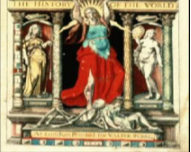
Raleigh’s History of the World
The Woman with the Face of the Sun
Beneath the central imagery associated with Raleigh appears another important celestial figure: Virgo.

Virgo represents the heavenly woman whose face shines with the brilliance of the Sun, corresponding to the extraordinary sign described at the beginning of Revelation 12:
“And there appeared a great wonder in heaven; a woman clothed with the sun, and the moon under her feet, and upon her head a crown of twelve stars.”
—Revelation 12:1, KJV
The language of Revelation deliberately directs the reader’s attention upward: “there appeared a great wonder in heaven.”
From a celestial perspective, Virgo becomes the great woman in the heavens—clothed with the Sun, standing above the Moon, and crowned with twelve stars.
Revelation 12: The Celestial Vision
The chapter can therefore be read as unfolding through a sequence of heavenly signs.
First appears the Woman.
Virgo is a great sign in heaven—a woman clothed with the sun, the moon beneath her feet, and a crown of twelve stars upon her head. She is with child, crying out in labor, in pain to give birth. The twelve stars are part of the zodiacal system—twelve constellations forming the heavenly “crown.”
The imagery of:
- The sun clothing the woman
- The moon under her feet
is understood astronomically. The “moon under her feet” suggests a specific alignment in the sky, marking a particular time.
1. The Seed of the Woman: The First Prophecy of the Virgin Birth
Genesis 3:15 (KJV)
“And I will put enmity between thee and the woman, and between thy seed and her seed; it shall bruise thy head, and thou shalt bruise his heel.”
This is the first messianic prophecy in Scripture, often called the Protoevangelium, or first announcement of the Gospel.
The remarkable expression is “her seed.” Throughout biblical genealogies, descent is commonly traced through the male line. Yet here God identifies the promised deliverer with the seed of a woman.
In the Christian understanding, this prophecy finds its fulfillment in the virgin birth of Jesus Christ.
Isaiah 7:14 (KJV)
“Behold, a virgin shall conceive, and bear a son, and shall call his name Immanuel.”
Luke 1:34–35 (KJV)
“Then said Mary unto the angel, How shall this be, seeing I know not a man?”
“The Holy Ghost shall come upon thee, and the power of the Highest shall overshadow thee: therefore also that holy thing which shall be born of thee shall be called the Son of God.”
The distinction is profound. Jesus received His human nature through Mary, conceived without a human father. In biological terms, Mary’s egg provided the maternal contribution to His humanity, although Scripture does not describe the mechanics of conception.
This also explains the importance of the two genealogies. Joseph supplied the royal claim to David’s throne through Solomon, while Mary’s lineage is traditionally understood to establish Jesus’ biological descent from David through Nathan.
2. Eve, Virgo, and the Promised Child
The words that were spoken to Eve can also be seen in the heavens as applying to Virgo.
Genesis 3:16 (KJV)
“Unto the woman he said, I will greatly multiply thy sorrow and thy conception; in sorrow thou shalt bring forth children; and thy desire shall be to thy husband, and he shall rule over thee.”
Virgo is here seen first as Eve and then as Mary. Virgo is the Latin word from which the name Virgin comes. It is associated not only with the image of the virgin but also with a child figure historically linked to the constellation known as Coma, sometimes referred to as “the Desired.”
This child is seen as representing the promised seed, which would pass through Eve’s husband and later become the Seed of a Woman, when a virgin would become the mother of the Desired Son.
Genesis 3:16 speaks of “thy desire shall be to thy husband,” connecting with the prophetic seed in Genesis 3:15. The positioning of this figure in the heavens is also noted, as it is said to sit before the constellation Boötes, whose name means “the husbandman.”
In this framework, Virgo represents the woman, the child (Coma—the Desired) represents the promised offspring, and Boötes represents the husbandman—forming a celestial picture reflecting the relationship between the woman and her seed.
3. The Royal Right Through Joseph and the Davidic Bloodline Through Mary
The distinction is that Jesus received His royal right to David’s throne through Joseph, while His biological descent from David came through Mary.
Joseph descended from David through Solomon and the royal kings of Judah, as recorded in Matthew 1. Although Joseph’s ancestry included Jeconiah, whose descendants were forbidden to prosper upon David’s throne (Jeremiah 22:30), Jesus was not Joseph’s biological son. Through Joseph, He nevertheless inherited the legal royal claim to David’s throne.
Mary’s lineage is traditionally understood by many Christian interpreters to descend from David through Nathan, another son of David (Luke 3:23–31). Through Mary, Jesus possessed Davidic blood without descending biologically from Jeconiah.
Thus, Joseph supplied the royal title, Mary supplied the Davidic bloodline, and the virgin birth preserved the Messiah from the judgment pronounced upon Jeconiah.
This fulfilled the promise that the Lion of Judah would inherit the throne of David and reign forever (Luke 1:32–33; Revelation 5:5).
The identification of Luke’s genealogy as Mary’s is a traditional Christian interpretation rather than an explicit statement in the text.
4. Isaiah 7: The Sign in the Depths and the Heavens
This brings us directly to Isaiah 7. The Lord tells Ahaz to ask Him for a sign:
“Ask thee a sign of the LORD thy God; ask it either in the depth, or in the height above.” — Isaiah 7:11
This is important because the sign can be sought in either of two places: the depths beneath or the heavens above.
Rashi gives a remarkable interpretation of these words. On the command to ask for a sign “in the depth,” Rashi explains:
“Ask for a sign in the depths of the abyss, to resurrect a dead person for you, or go up to the heights above to ask for a sign in the heavens.”
His Hebrew reads:
שאל אות בעמקי תהום להחיות לך מת או הגבה למעלה לשאול אות בשמים
In other words, Ahaz could ask for a miracle in the depths—even the raising of a dead person—or he could ask for a sign in heaven.
Ahaz refuses. He answers:
“I will not ask, neither will I tempt the LORD.” — Isaiah 7:12
Because Ahaz will not ask for the sign, the Lord Himself chooses the sign that will be given:
“Therefore the Lord himself shall give you a sign; Behold, a virgin shall conceive, and bear a son, and shall call his name Immanuel.” — Isaiah 7:14
The sequence is important. Ahaz is told to ask for a sign either in the depths or in the heavens. Rashi specifically connects the depths with bringing a dead person back to life and the heights with a sign in heaven.
Ahaz refuses to choose either one. God then gives the sign Himself: the Virgin and her Child.
We therefore move from the depths and resurrection to the heavens, and then directly to the image of the Virgin bearing the Son.
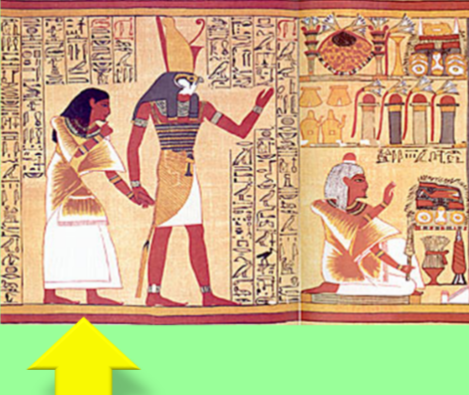
The Book of the Dead was also called the “Coming forth by day” It tells of a story of the death and resurrection of the Horus which we know as Orion. follows the apparent travel of the sun. He is the son of the sun, and in the Bible, “the sun of righteousness”. It a Young man holding a relationship to the Hawk a symbol of Horus or Orion. The hawk was a symbol of one that could fly from the heights of heaven to the depths.
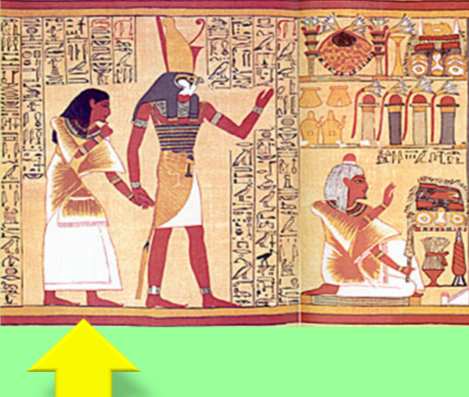
The Egyptian Book of the Dead was also called the Coming Forth by Day.
It tells the story of the death and resurrection of the Sun associated with the Egyptian divine figures, and this story was also projected into the heavens. Horus known by us a Orion became especially important in this celestial imagery. The apparent movement of the Sun provides the framework through which the story can be followed. The hawk, or falcon, is also important in Egyptian symbolism because it could soar into the heights of heaven and descend toward the depths below. Thus, even in the Egyptian imagery, we encounter the two directions that become so important in Isaiah: the height above and the depth below.
Matthew identifies this Child with Jesus when he quotes Isaiah:
“Behold, a virgin shall be with child, and shall bring forth a son, and they shall call his name Emmanuel, which being interpreted is, God with us.” — Matthew 1:23
Matthew’s expression “being interpreted” is interesting. The Greek word is μεθερμηνεύω (metahermēneuō), from meta and hermēneuō. Its ordinary lexical meaning is to interpret or translate, but the word also draws our attention to the ancient concept associated with Hermes, the messenger and interpreter.
The Romans identified Hermes with Mercury.
Mercury is both a planet and a metallic element.
As a planet, Mercury is the planet nearest the Sun. This becomes important to the picture because we are following a figure accompanying the apparent journey of the Sun through the heavens.
The celestial figure changes as the journey progresses. We first see the child, then the young man in his strength, and finally the old man carrying the staff. These are not separate stories. They are different stages in the life and journey of the same Man.
Mercury as a substance adds another aspect to the picture. Unlike most familiar metals, mercury is liquid at ordinary room temperature. It changes and flows rather than retaining the rigid appearance of an ordinary metal. This provides an image of transformation as one celestial manifestation gives way to another during the journey.
The sequence we are seeing is therefore the Virgin and Child, the young Man, the old Man, death, and restoration.
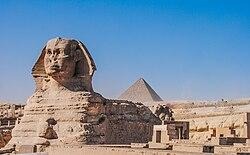
5. The Sphinx and the Journey of Man
The famous Riddle of the Sphinx adds another dimension to the picture. It asks:
What creature walks on four legs in the morning, two legs at noon, and three legs in the evening?
The answer is Man.
As an infant, he crawls on four; as a grown man, he walks upright on two; and as an old man, he walks upon two legs with a staff, making three.
That is precisely the progression we have just been following in the pictures: the child, the man in his strength, and the old man with the staff.
The riddle concerns the changing appearance of Man during the course of his life. The word “soul” comes from “solar.”
Bullinger, in The Witness of the Stars, regarded this as a key to the proper sequence of the Zodiac. He wrote that the Sphinx was a “never-ceasing monitor,” directing the reader to begin with Virgo and to end with Leo. He further noted that in the Zodiac of the Temple of Esneh in Egypt, a Sphinx was placed between those two signs; he calls the “Heavenly Volume”.
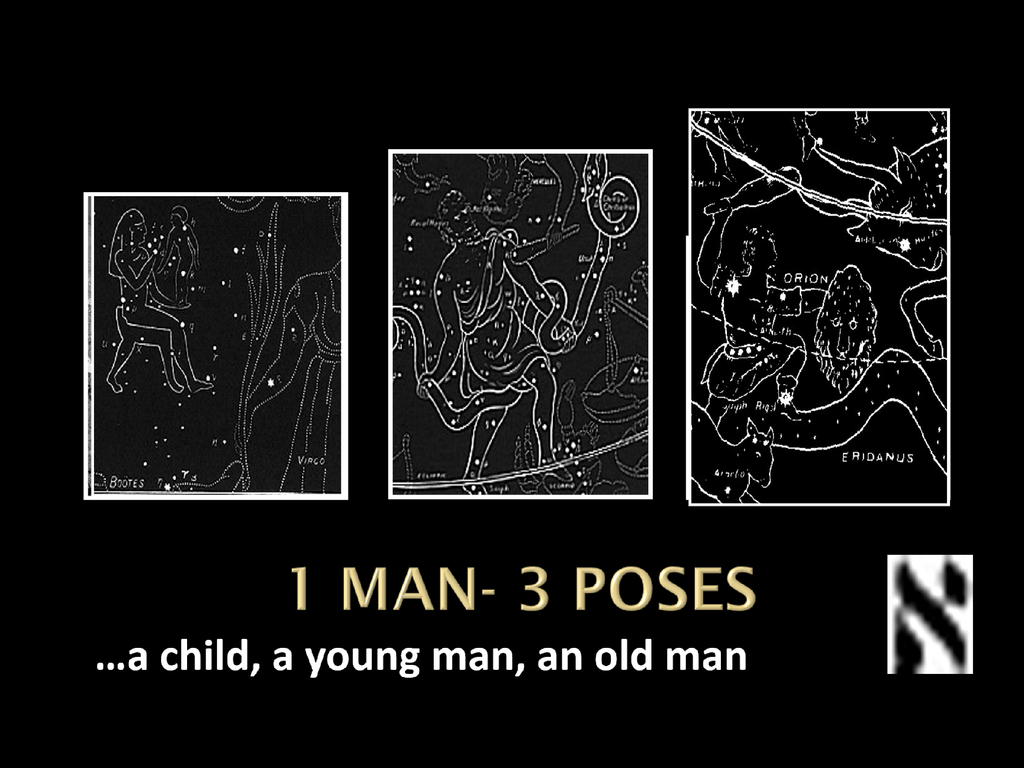
That is precisely the progression we have just been following in the pictures: the child, the man in his strength, and the old man with the staff. The riddle concerns the changing appearance of Man during the course of his life. The word “soul” comes from “solar”
The same person, the Messiah, appears in different forms according to the stage of His journey.
The Esnah zodiac shows the two ends of the celestial story: the Woman and the Lion—Virgo and Leo. The story begins with the Virgin and proceeds through the celestial figures until it reaches the Lion.
The same person, the Messiah, appears in different forms according to the stage of his journey.
lion. This connection makes it fitting that Mary went there.
The Messiah was therefore the Seed of the Woman promised in Genesis, the Son born of a virgin foretold in Isaiah, and the Lion of Judah revealed in Revelation.
The virgin birth united these promises while preserving Jesus from biological descent through Joseph’s line of Jeconiah.
Isaiah 19:1 (KJV) declares:
“Behold, the LORD rideth upon a swift cloud, and shall come into Egypt: and the idols of Egypt shall be moved at his presence, and the heart of Egypt shall melt in the midst of it.”
7. Raleigh’s Picture: The Woman with the Face of the Sun
Raleigh’s Bottom Picture
Beneath the central imagery associated with Raleigh appears another important celestial figure: Virgo.

Virgo represents the heavenly woman whose face shines with the brilliance of the Sun, corresponding to the extraordinary sign described at the beginning of Revelation 12:
Revelation 12:1 (KJV)
“And there appeared a great wonder in heaven; a woman clothed with the sun, and the moon under her feet, and upon her head a crown of twelve stars.”
The language of Revelation deliberately directs the reader’s attention upward: “there appeared a great wonder in heaven.”
From a celestial perspective, Virgo becomes the great woman in the heavens—clothed with the Sun, standing above the Moon, and crowned with twelve stars.
Revelation 12: The Celestial Vision
The chapter can therefore be read as unfolding through a sequence of heavenly signs.
First appears the Woman.
Virgo is a great sign in heaven—a woman clothed with the Sun, the Moon beneath her feet, and a crown of twelve stars upon her head.
She is with child, crying out in labor, in pain to give birth.
The twelve stars are part of the zodiacal system—twelve constellations forming the heavenly “crown.”
The imagery of the Sun clothing the woman and the Moon under her feet is understood astronomically. The “Moon under her feet” suggests a specific alignment in the sky, marking a particular time.
Virgo has historically been depicted as a woman connected with childbirth, and in some traditions, she is shown with a child.
This imagery appears in different civilizations. The child figure is often linked to a divine or messianic figure—in some Zodiacs referred to as “the Christ” or “Christos,” discussed in the Book of Revelation as the name Jesus Christ.
In other Zodiacs, the child is called Coma, representing a mother and child figure.
Walter Raleigh shows Virgo, and on the left, Isis. Her child was called Horus.
- In other Zodiacs, the child is called Coma, representing a mother and child figure.
8. The Timing of the Messiah’s Birth
Tishri, specifically Tishri 1, known as the Feast of Trumpets, begins the Jewish New Year.
The Moon represents the monthly cycle. When aligned beneath Virgo’s feet, it signals a specific celestial moment.
Tishri 1 is marked by the blowing of trumpets in Jewish tradition. The trumpet also proclaims the birth of the Messiah.
Yahshua (Yeshua) was born on Tishri 1.
The Messiah was not born on December 25. Instead, His birth aligns with Tishri 1 based on celestial and scriptural timing.
Elizabeth’s pregnancy is based on her husband serving in the priestly cycle.
This conclusion is drawn by linking the six-month gap before Mary’s conception with a full-term pregnancy of nine months, leading to a birth around Tishri 1—the scales under the feet of Virgo.
Thus, the Messiah’s birth fulfills both the heavenly signs of astronomy and the earthly patterns of Scripture and the Temple cycles.
9. Revelation 12: The Dragon and the Child
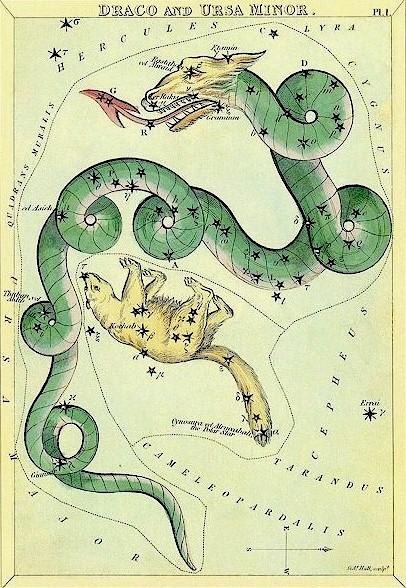
Revelation 12 continues with another sign.
A great red dragon appears with seven heads and ten horns, with crowns upon his heads. His tail sweeps a third of the stars from heaven and casts them to the earth.
He stands before the woman, waiting to devour her child as soon as it is born.
This is Draco, whose tail encompasses one-third of the heavens and who stands before Virgo.
He has seven heads. There are seven star signs that depict him or sometimes his son, the Antichrist figure discussed as the Beast rising out of the sea with seven heads and ten horns.
These are identified as:
- Draco
- Hydra
- Serpentarius
- The first serpent held by Hercules
- The second serpent held by Hercules
- The third serpent held by Hercules
- Hydra
Revelation continues: the Child is born—a male destined to rule all nations with a rod of iron—and He is caught up to God and to His throne.
Cepheus is the King upon a throne, whose name means the Branch.
In the apparent travel and the ancient mythology attached to it, He followed the path of the Sun, dying on Passover and rising three days later to become the King.

10. Joshua, the Branch, and the Dragon at His Right Hand
Revelation: The child is born—a male destined to rule all nations with a rod of iron—and he is caught up to God and to His throne.
Zechariah opens with a remarkable scene:
Zechariah 3:1 (KJV)
“And he shewed me Joshua the high priest standing before the angel of the LORD, and Satan standing at his right hand to resist him.”
The name Joshua is the Hebrew name Yehoshua/Yeshua, the same name underlying Jesus/Yeshua.
Joshua the high priest therefore becomes particularly significant when Zechariah explicitly tells us that he and his companions are signs:
Zechariah 3:8 (KJV)
“Hear now, O Joshua the high priest, thou, and thy fellows that sit before thee: for they are men wondered at [men of sign]: for, behold, I will bring forth my servant the BRANCH.”
Joshua is therefore functioning prophetically. He is a sign pointing forward to the coming Branch.
And this connects naturally with the celestial argument because Genesis establishes that the heavenly lights themselves were appointed “for signs”:
Genesis 1:14 (KJV)
“Let them be for signs, and for seasons, and for days, and years.”
There are therefore two kinds of signs telling the same story: Joshua is a terrestrial prophetic sign, while the stars provide the celestial sign.
Cepheus: The Crowned King
Cepheus presents the figure of the enthroned and crowned King. He represents the royal Branch, corresponding to Zechariah’s declaration:
Zechariah 6:12 (KJV)
“Behold the man whose name is the BRANCH.”
That relationship becomes particularly striking when placed beside Zechariah 3.
On earth, Joshua stands before YHWH with:
“Satan standing at his right hand to resist him.”
In the celestial picture, the Dragon stands beside the King, opposing the one represented by the Branch.
The same confrontation is being portrayed:
Joshua/Yeshua — Satan at His right hand.
The Branch/King — Draco the Dragon beside Him.
This also connects with Revelation 12, where the celestial adversary is explicitly identified:
“That old serpent, called the Devil, and Satan.”
The Dragon is therefore not merely another character in the celestial story. He represents the adversary who contests the position of the true King.
This brings us directly back to Isaiah 14. The adversary declares:
“I will exalt my throne above the stars of God.”
“I will sit also upon the mount of the congregation, in the sides of the north.”
“I will be like the most High.”
And God immediately rebukes the adversary:
Zechariah 3:2 (KJV)
“The LORD rebuke thee, O Satan.”
So, the celestial and prophetic pictures converge: the Dragon opposes the King; Satan opposes Joshua; Lucifer seeks the throne; but God brings forth His servant, THE BRANCH.
The central figure is therefore not the Dragon who attempts to seize the throne, but Yeshua—the sign pointing to the Branch who ultimately possesses it.
11. The Serpent, Hydra, and Enmity
Genesis 3:15 (KJV)
“And I will put enmity between thee and the woman, and between thy seed and her seed; it shall bruise thy head, and thou shalt bruise his heel.”
Hydra stands next to the woman. Hydra means water. In Hebrew, the word Mem also means seed. Here Hydra represents the Antichrist.
The Zohar states,
“Whenever you see a ship with a serpent on its banner, its name is enmity.”
Argo is the ship with a serpent on its banner. Its mast pierces through the serpent and stands between her seed and the serpent’s seed.
This represents the company of travelers who will come and stand in a war between the serpent’s seed and the Seed of God.
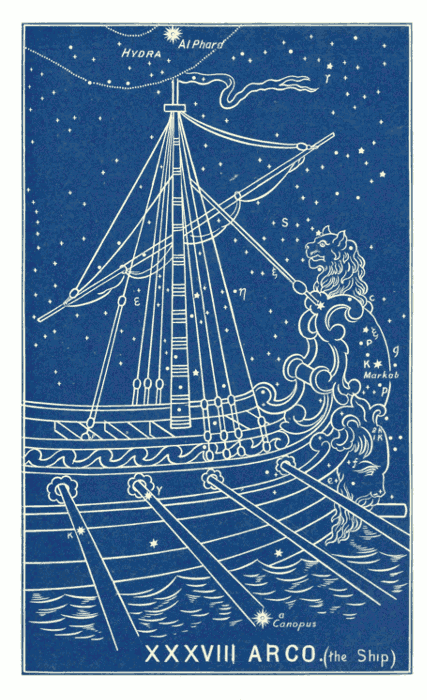
12. Argo: The Ship and the Company of the Redeemed
Argo — The Pilgrims Safe at Home
ARGO in mythology is the ship of Jason, a term that can also refer to Jah’s son—the Son of God.
From The Witness of the Stars:
This is the celebrated ship of the Argonauts, which Homer sang nearly ten centuries before Christ.
Thus, through the fables and myths of the Greeks, we see a primeval light shining through; and once that light is perceived, it illuminates this sign and its constellations so that their teaching becomes clear.
Argo — The Company of the Redeemed
From The Witness of the Stars:
It will indeed be a large vessel—the true Argo—with its company of travelers, “a great multitude which no man can number.”
All this is indicated by the immense size of the constellation, as well as by the large number of its stars.
Its brightest star, α (near the keel), is called Canopus, which means “the possession of Him who cometh.”
Other star names include:
- Sephina — the multitude or abundance
- Tureis — the possession
- Asmidiska — the released who travel
- Soheil (Arabic) — the desired
- Subilon — the Branch
Is not all this exactly in harmony with the rest of this sign? And is not this what is written in the Book?
The Motion of the Ship
Aratus sings of Argo:
“Stern-foremost hauled; no mark of onward-speeding ship.
Sternward she comes, as vessels do
When sailors turn the helm
On entering harbor: all the oars back-water,
And gliding backward, to an anchor comes.”
This describes that blessed homecoming.
The Return to Zion
Isaiah 35:10 (KJV)
“The ransomed of the LORD shall return,
and come to Zion with songs,
and everlasting joy upon their heads:
they shall obtain joy and gladness,
and sorrow and sighing shall flee away.”
Chapter 3 – Exclusivity
4Q521-Messianic Profile-Parallels Only Jesus
Why 4Q521 Matters for Essene Recognition
4Q521, sometimes called the “Messianic Apocalypse” is a carefully preserved Essene expectation of what Israel’s Messiah would do—and the actions it lists resemble, almost point for point, the activities attributed to Jesus.
The scroll begins with an arresting line:
“By this you will know the Messiah”
This tells us we are to receive a positive declaration here.
“The heavens and the earth shall listen to His Messiah.”
The phrase evokes the Gospel episode where Jesus calms the sea and his disciples declare:
“What manner of man is this, that even the winds and the sea obey him?” (Matt 8:27)
Both texts share a worldview in which divine authority is manifested not only over human beings but over creation itself.
Yet the deeper impact of 4Q521 lies in its list of messianic signs—signs that mirror the exact categories Jesus cites when confirming his identity to John the Baptist.
“The Lord will accomplish glorious things which have never been done before… He will free prisoners, open the eyes of the blind, raise up those who are bowed down, revive the dead, and bring good news to the poor.”
These signs are extraordinary because they provide a means of identification. They tell us not merely that a Messiah will come, but how that Messiah will be recognized.
Translated Highlights of 4Q521
(Fragment 2 + Fragment 4, Column 2)
He will honor the pious upon the throne of His eternal kingdom.
He will set prisoners free,
open the eyes of the blind,
raise up those who are bowed down.
He will heal the critically wounded,
revive the dead,
and bring good news to the afflicted.”
(Fragment 7 + Fragment 5, Column 2)
“Those who do good shall bless the Lord…
when the One who revives raises the dead of His people.
He shall open graves…
and the heavens shall meet…
and all the angels…”
The Question of John the Baptist
The importance of these signs becomes evident in the Gospel accounts. While imprisoned, John the Baptist sent messengers to Jesus with a direct question:
“Art thou he that should come? or look we for another?”
John was not asking whether Jesus was a teacher or a prophet. He wanted to know whether Jesus was the expected Messiah. Jesus did not answer with a theological argument. He did not appeal to genealogy. He did not cite political authority. Instead, He pointed to these very things as the proof he was the Messiahs:
“Go and tell John what you have seen and heard: the blind receives their sight, the lame walk, the lepers are cleansed, the deaf hear, the dead are raised, and the poor have good news preached to them.”
Jesus answered John’s question by directing attention to the very signs Qumran associated with the coming Messiah and said would be the very things that would identify him..
Thus, before we ask whether Jesus might fit the Essene category of a “Teacher of Righteousness,” it is critical to observe that Jesus already fits the Essene category of “Messiah.” Not metaphorically, but in terms of the concrete expectations the Qumran community preserved.
Side-by-Side Comparison: 4Q521 and the Gospel Record
| 4Q521 (Dead Sea Scrolls) | Gospel Passages |
|---|---|
| “The heavens and the earth shall listen to His Messiah.” | Jesus commands wind and sea; they obey (Matt 8:26–27). |
| “He will open the eyes of the blind.” | Jesus restores sight (Matt 9:27–30; John 9:1–7). |
| “He raises up those who are bowed down.” | Jesus heals the bent woman (Luke 13:10–13). |
| “He will set prisoners free.” | Jesus proclaims release to captives (Luke 4:18; Isa 61). |
| “He heals the wounded.” | Jesus heals every disease and affliction (Matt 4:23). |
| “He revives the dead.” | Jesus raises the dead (Mark 5:41; Luke 7:14–15; John 11). |
| “He brings good news to the afflicted.” | “The poor have the gospel preached to them” (Matt 11:5). |
| “He shall open graves.” | Tombs open at Jesus’ death (Matt 27:51–53). |
The parallels are unmistakable.
The quotation is from Matthew 9:33 (KJV):
“And when the devil was cast out, the dumb spake: and the multitudes marvelled, saying, It was never so seen in Israel.”
A related passage is Matthew 9:35 (KJV):
“And Jesus went about all the cities and villages, teaching in their synagogues, and preaching the gospel of the kingdom, and healing every sickness and every disease among the people.”
The phrase “It was never so seen in Israel” expresses the astonishment of the crowds at the extraordinary works of Jesus.
If the Teacher of Righteousness, who Qumran believed was the Messiah, had been someone other than Jesus. Then these things would have been done before. And the New Testament testimony would be wrong.
Chapter 4 -Timing & Identity
Matches Only Jesus
The Melchizedek Scroll (11Q13): Liberty to the Captives and the End of Nine Jubilees
The Melchizedek Scroll (11Q13, 11QMelchizedek), discovered in Cave 11 at Qumran, connects the proclamation of liberty in Isaiah 61:1 with the completion of nine Jubilees and the arrival of the tenth Jubilee.
11Q13, Column II, Lines 4–8
“To proclaim liberty to the captives.”
— Isaiah 61:1, cited in the Melchizedek Scroll.
The scroll continues:
“And liberty will be proclaimed for them, to free them from [the debt of] all their iniquities.”
“And this [will] happen in the first week of the jubilee which follows the ni[ne] jubilees.”
— 11QMelchizedek, Column II, lines 6–8, translation by Florentino García Martínez and Eibert J. C. Tigchelaar.
Connection to Jesus’ Proclamation in Luke 4:18–21
Jesus reads Isaiah 61 in the synagogue at Nazareth:
“The Spirit of the Lord is upon me, because he hath anointed me to preach the gospel to the poor; he hath sent me to heal the brokenhearted, to preach deliverance to the captives, and recovering of sight to the blind, to set at liberty them that are bruised,
To preach the acceptable year of the Lord.”
— Luke 4:18–19 (KJV)
He then declares:
“This day is this scripture fulfilled in your ears.”
— Luke 4:21 (KJV)
The prophetic connection is the proclamation of liberty, the forgiveness of sins, and the Jubilee of redemption. The Melchizedek Scroll places this liberation in the first week of the tenth Jubilee, following nine completed Jubilee periods, while the Day of Atonement is associated with the end of that tenth Jubilee.
For the complete passage, see 11QMelchizedek — English translation, Column II
The Ten-Jubilee Prophecy of Melchizedek
The Melchizedek Scroll contains another important chronological statement:
The Messiah would preach “Liberty to the captives”. This was a term identifying the beginning of a Jubilee cycle.
“This word will come in the first week of the Jubilee period that follows nine Jubilees.”
The context concerns liberty, forgiveness, restoration, inheritance, and divine favor. The language comes directly from Leviticus 25 and Isaiah 61. If the Jubilee cycles are calculated from the restoration era associated with Ezra and Nehemiah, the tenth Jubilee fell in the Fall of A.D. 27. ( Seen as our A.D. 28 since the Jewish year begins in the Fall)
This date is remarkable because it corresponds exactly with the beginning of Jesus’ public ministry. These are precisely the themes Jesus proclaimed when He read Isaiah 61 and announced:
“This day is this scripture fulfilled in your ears.”
Jesus did not have a three-year ministry. Three Passovers are identified in the New Testament. The third was the day he died. The first then was in A.D. 28 the second was in A.D. 29 and the third was in A.D. 30 when he died.
The Convergence of the Chronologies
.
- The Melchizedek Scroll connects the Messiah with Daniel’s prophecy to The 10 Jubilee calculation from the time of Nehemiah’s celebration, which aligns with the beginning of Christs ministry.
- Josephus defines a Grand Cycle of 12 Jubilees or 600 years from Ezekiel stating that Jesus began his ministry at the conclusion of it.
Antiquitie1,3:9
A The Great Cycle is equal to 12 Jubilee cycles and the Jubilee year that marked the Commencement of Jesus Jubilee ministry occurred with the time span of 12 Jubilee cycles.
Beginning with Ezekiel’s Jubilee in B.C.572 this cycle again falls in A.D. 28. the date Jesus began his ministry
10 Jubilees from Nehemiah’s Time
12 jubilees from Ezekiel’s Time
Each system is independent, yet each converges upon the same narrow period of history. The result is extraordinary. The signs identify the Messiah. The chronology identifies the time. The same figure appears at the same moment: Jesus of Nazareth.
The Melchizedek Scroll: The Proclamation of Daniel’s Prophetic Calendar
The significance of the Melchizedek Scroll (11Q13) is that the proclamation of liberty is tied to the prophetic calendar of Daniel’s seventy weeks, not merely to the ordinary Jubilee laws of Leviticus.
Daniel 9:24 declares:
“Seventy weeks are determined upon thy people and upon thy holy city, to finish the transgression, and to make an end of sins, and to make reconciliation for iniquity, and to bring in everlasting righteousness, and to seal up the vision and prophecy, and to anoint the most Holy.”
The Melchizedek Scroll likewise joins the forgiveness of iniquity, the liberation of the captives, and the appointed time of atonement to a Jubilee chronology.
The nine Jubilees followed by the tenth establish a prophetic sequence that can be compared with Daniel’s seventy weeks, traditionally understood as 490 years. The scroll thereby provides an important Qumran witness to the interpretation of Israel’s redemption through an appointed sacred calendar.
The prophetic calculation
Daniel’s seventy weeks
70 × 7 = 490 years
Nine Jubilee cyclesTenth Jubilee
Each cycle represents 49 years. Ten cycles correspond to Daniel’s 490 years.
The connection becomes particularly explicit in 11Q13, Column II, line 18, where the scroll identifies the herald of good news with an anointed figure associated with Daniel. The text thus brings together Isaiah 52:7, Isaiah 61:1, Leviticus 25, and Daniel 9.
echariah identifies the event that brings Israel to repentance and cleansing: the recognition of the Messiah whom they pierced.
Zechariah 12:10 — They Shall Look Upon Him Whom They Pierced
“And I will pour upon the house of David, and upon the inhabitants of Jerusalem, the spirit of grace and of supplications: and they shall look upon me whom they have pierced, and they shall mourn for him, as one mourneth for his only son, and shall be in bitterness for him, as one that is in bitterness for his firstborn.”
This prophecy is followed by the promise of purification:
Zechariah 13:1 (KJV)
“In that day there shall be a fountain opened to the house of David and to the inhabitants of Jerusalem for sin and for uncleanness.”
These passages provide the prophetic connection to the Day of Atonement described in the Melchizedek Scroll. Zechariah foretells the recognition of the pierced Messiah, the mourning of Israel, and the opening of a fountain for the cleansing of sin.
The sequence also recalls Leviticus 25:9, where the Jubilee trumpet is sounded on the Day of Atonement:
“Then shalt thou cause the trumpet of the jubile to sound on the tenth day of the seventh month, in the day of atonement shall ye make the trumpet sound throughout all your land.”
The proclamation of liberty, therefore, is inseparable from the Day of Atonement. Daniel establishes the prophetic chronology, Isaiah announces liberty to the captives, the Melchizedek Scroll reveals the culmination of the tenth Jubilee, and Zechariah identifies the repentance and cleansing of Israel when they look upon the One whom they pierced.
The tenth Jubilee thus anticipates the final national atonement of Israel, when the Messiah is recognized and the promise of cleansing is fulfilled.
This connection between 11Q13 and Zechariah 12–13 is a theological synthesis of the prophetic texts; the surviving Melchizedek Scroll does not explicitly quote Zechariah or identify the pierced Messiah.
Melchizedek (11Q13)
Daniel’s Prophecy
The chronology becomes even more remarkable in the Melchizedek Scroll, designated 11Q13. This text directly connects the expected deliverer with Daniel’s prophecy. The scroll declares:
“And the messenger is the Anointed of the Spirit, of whom Daniel spoke: ‘After the sixty-two weeks, an Anointed One shall be cut off.'”
Daniel provides the timetable, and the Melchizedek Scroll identifies the individual expected to appear as the anointed one or Messiah within that timetable.
Sir Robert Anderson’s Calculation
Anderson first approached Daniel’s prophecy as a mathematical problem. His conclusion was that the prophecy terminated during the period of Christ’s public presentation to Jerusalem. He believed this represented one of the strongest evidences for the divine inspiration of Scripture. Daniel had not merely predicted that a Messiah would come. He had identified the period in which He would appear. But his math had discrepancies.
Clarence Larkin’s Refinement
Clarence Larkin later adopted Anderson’s framework and incorporated it into his prophetic studies. Larkin agreed that Daniel’s weeks represented years He emphasized that the prophecy pointed not merely to a general era but to the public presentation of the Messiah. He explained that the prophetic year consisted of 360 days, converted that to days and then laid them over the Julian calendar to find the date. Unlike Robert his date matched all other prophecies regarding Christ’s arrival as the Messiah to come, and then dying, to be “cut of but not for himself”.
The year was AD 30.
Daniel’s Seventy Weeks prophecy is among the most famous chronological passages in Scripture. The prophet divides the period into seventy weeks. These weeks are generally understood as weeks of years, making the total period 490 years. Daniel further divides the period into seven weeks, sixty-two weeks, and one final week. The first sixty-nine weeks total 483 years.
The period from the decree to the coming of the “Messiah the Prince” is described as seven weeks and sixty-two weeks, a total of sixty-nine weeks. If one prophetic week represents seven years, then 69 weeks equals 483 years (69 × 7 = 483).
Using the prophetic year of 360 days, 483 years amounts to 173,880 days (483 × 360 = 173,880). This is the total number of days specified by the prophecy.
Jesus, recognized as “Messiah the Prince,” made His triumphal entry into Jerusalem on Palm Sunday, April 2, A.D. 30. At first glance, the interval between 445 B.C. and A.D. 30 appears to be only 475 years, which is eight years short of the 483 years specified in the prophecy.
This apparent discrepancy is resolved by recognizing the difference between Julian (astronomical) years and prophetic (biblical) years. The 475 years from 445 B.C. to A.D. 30 are calculated using Julian years of approximately 365¼ days each. When converted into days, this period totals more than 173,000 days. When those days are expressed in terms of the biblical prophetic year of 360 days, they equal exactly 483 prophetic years, or 173,880 days.
This demonstrates that there is no gap between the first and second segments of the Seventy Weeks prophecy. The prediction that sixty-nine weeks, or 173,880 days, would elapse before the coming of “Messiah the Prince” was therefore fulfilled with remarkable precision.
The importance of the calculation lies not merely in its precision but in its destination. The prophecy points to the appearance of “Messiah the Prince” arrival and destination. Daniel then declares:
“And after threescore and two weeks Messiah the Prince shall come and be cut off, but not for himself.”
The prophecy therefore predicts both the appearance and the death of the Messiah. Jesus arrived on Palm Sunday, the very day predicted and the peolpe accepted him as the Messiah saying
“Blessed is he who comes in the name of the LORD”.
The Dead Sea Scrolls themselves connect this prophecy with the expected “Anointed One”, of Daniel (referred to in most translations as the Messiah). This is discussed in the Melchizedek Scroll.
Chronology alone cannot prove identity. A date does not identify a person. Yet when chronology is combined with the signs discussed in the other chapters, the convergence becomes increasingly difficult to dismiss. The signs point to Jesus. The chronology points to only one person in history, to Jesus.
Opinion
Currant claim is the scroll is not speaking about Jesus, it is speaking about Melchizedek. But Melchizedek never died on Passover A.D. 30 or preached Liberty to the captives in A.D. 28 to begin a Jubilee.
Alternative View –Melchizedek Christ’s Angel
Throughout the Old Testament we find God surrounded by heavenly beings, the sons of God, and the angelic host.
If humanity is created according to a heavenly pattern, then earthly persons may correspond to heavenly realities that precede them. This possibility is strengthened by other passages. Jesus taught that the little ones have angels who continually behold the face of the Father in heaven.
Likewise, when Peter was miraculously released from prison, those who heard his voice exclaimed:
“It is his angel.”
Their response reveals early Christian belief that a heavenly representative could appear in a form recognizable as the earthly person.
Two Bodies
Paul speaks of both the earthly body and the heavenly body in 1 Corinthians 15:40–49 (KJV).
1 Corinthians 15:40
“There are also celestial bodies, and bodies terrestrial: but the glory of the celestial is one, and the glory of the terrestrial is another.”
1 Corinthians 15:44
“It is sown a natural body; it is raised a spiritual body. There is a natural body, and there is a spiritual body.”
1 Corinthians 15:47–49
“The first man is of the earth, earthy: the second man is the Lord from heaven.
As is the earthy, such are they also that are earthy: and as is the heavenly, such are they also that are heavenly.
And as we have borne the image of the earthy, we shall also bear the image of the heavenly.”
Paul further explains this transformation in 2 Corinthians 5:1:
“For we know that if our earthly house of this tabernacle were dissolved, we have a building of God, an house not made with hands, eternal in the heavens.”
Are the two one and the same?
Paul does not explicitly say, “The two are one and the same.” However, he describes the continuity between the earthly and resurrected body.
1 Corinthians 15:53
“For this corruptible must put on incorruption, and this mortal must put on immortality.”
The important distinction is that Paul describes one person undergoing transformation, rather than necessarily possessing two identical bodies.
His teaching is that the earthly body is mortal and corruptible, while the resurrected body is spiritual and incorruptible. The identity continues, but the body’s condition changes.
The closest passage to this thought is 1 Corinthians 15:49: “And as we have borne the image of the earthy, we shall also bear the image of the heavenly.”
This provides a foundation for exploring the relationship between the earthly image of man and his heavenly image.
Taken together, these passages suggest a correspondence between heaven and earth. The earth reflects the heavenly, and the visible reflects the invisible. If this principle applies to humanity generally, should it not apply supremely to Christ? If the Son of God became a man, then according to the pattern established in Genesis He too would appear as the earthly manifestation of a heavenly reality.
The question therefore becomes: in whose image did Jesus come?
The Book of Hebrews answers by connecting Christ with Melchizedek. Christ arises “after the similitude of Melchizedek,” while Melchizedek is “made like unto the Son of God.” The relationship is reciprocal, suggesting a shared heavenly pattern.
Melchizedek represents a heavenly and earthly priesthood and was also the priest of Salem meaning Jerusalem Hebrews 9, mentions the cherubim in the Most Holy Place…the cherubim of glory shadowing the mercy seat; of which we cannot now speak particularly.” Paul was hinting that Melchizedek is one of the two Cherubim
Chapter 5-The Vision of Amram
The Two Heavenly Rulers: Melchizedek and Melki-Resha
The term Satan means “the adversary” it is not his name.
The ancient work, known as the Visions of Amram (4Q543–549), survives in fragmentary Aramaic manuscripts discovered in Cave 4 at Qumran. Amram, the father of Moses and Aaron, receives a vision in which two supernatural beings contend over him. They are adversaries.
brill.com+1
1. The Vision: Two Watchers Contend Over Amram
The central scene is preserved in 4Q544, with parallel material in other fragments.
A short passage reads:
“And behold! Two were arguing over me”
— 4Q544, fragment 1, line 10.
brill.com
Amram asks the beings about their authority over him. One is associated with darkness, the other with light. The darker figure is described with frightening, serpent-like features in reconstructed translations.
One preserved name is Melki-Resha, meaning King of Wickedness or My King is Wickedness. His counterpart exercises dominion over light.
core.ac.uk+1
The vision establishes the opposition between two supernatural dominions.
2. Melchizedek and Melki-Resha: The Opposing Kings
| Melchizedek | Melki-Resha |
| King of Righteousness | King of Wickedness |
| Light | Darkness |
| Truth | Deception |
| Holy Priest | Evil Ruler |
| Liberation | Bondage |
| God’s Dominion | Dominion of Belial |
The names establish a striking conceptual opposition.
Melchizedek is the King of Righteousness, the priest of the Most High God described in Genesis 14:18 and Psalm 110:4.
Melki-Resha is the King of Wickedness, the supernatural adversary associated with darkness.
The identification of the light ruler specifically as Melchizedek or Michael is part of the wider comparison with Qumran writings.
Melki-Resha and the Wicked Priest
The Vision of Amram introduces Melki-Resha as a supernatural ruler associated with darkness. His name stands in direct conceptual opposition to Melchizedek.
Melchizedek as the Opposite of Melki-Resha in the Vision of Amram
| Melchizedek | Melki-Resha |
| King of Righteousness | King of Wickedness |
| Light | Darkness |
| Truth | Deception |
| Holy Priest | Evil Ruler |
| Liberation | Bondage |
| God’s Dominion | Dominion of Belial |
The names themselves establish a cosmic conflict.
Christ and Antichrist: A Mirror Image
Throughout Scripture, God’s adversaries often imitate His work. Just as Moses faced magicians who copied his signs, and just as false prophets mimicked true prophets, the Antichrist represents the ultimate counterfeit of Jesus Christ.
| Christ | Antichrist |
| Son of God | Son of Perdition |
| Truth | Deception |
| Humility | Pride |
| Servant King | Self-exalting ruler |
| Gives life | Brings death |
| Leads people to God | Leads people away from God |
| Sacrifices Himself for others | Sacrifices others for himself |
| Sealed by the Father | Marked by the Beast |
| Receives worship legitimately | Demands worship illegitimately |
| Builds the Kingdom of God | Establishes a counterfeit kingdom |
The Habakkuk Pesher expresses a similar conflict through two earthly figures: the Teacher of Righteousness and the Wicked Priest.
This permits a theological interpretation in which the earthly Wicked Priest manifests the same opposition to righteousness represented by Melki-Resha.
Judas completes the comparison through his betrayal of Jesus.
The Two Opposing Dominions
Kingdom of Righteousness
Melchizedek
King of Righteousness
Teacher of Righteousness
Jesus Christ
The Righteous Messiah
Dominion of Darkness
Melki-Resha / Belial
Dominion of Darkness
Wicked Priest
Judas Iscariot
The Betrayer
Proposed prophetic correspondences, not established historical identitiesMelki-Resha and the Wicked Priest
The Vision of Amram introduces Melki-Resha as a supernatural ruler associated with darkness. His name stands in direct conceptual opposition to Melchizedek.
Melchizedek as the Opposite of Melki-Resha in the Vision of Amram
| Melchizedek | Melki-Resha |
| King of Righteousness | King of Wickedness |
| Light | Darkness |
| Truth | Deception |
| Holy Priest | Evil Ruler |
| Liberation | Bondage |
| God’s Dominion | Dominion of Belial |
The names themselves establish a cosmic conflict.
Christ and Antichrist: A Mirror Image
Throughout Scripture, God’s adversaries often imitate His work. Just as Moses faced magicians who copied his signs, and just as false prophets mimicked true prophets, the Antichrist represents the ultimate counterfeit of Jesus Christ.
| Christ | Antichrist |
| Son of God | Son of Perdition |
| Truth | Deception |
| Humility | Pride |
| Servant King | Self-exalting ruler |
| Gives life | Brings death |
| Leads people to God | Leads people away from God |
| Sacrifices Himself for others | Sacrifices others for himself |
| Sealed by the Father | Marked by the Beast |
| Receives worship legitimately | Demands worship illegitimately |
| Builds the Kingdom of God | Establishes a counterfeit kingdom |
The Habakkuk Pesher expresses a similar conflict through two earthly figures: the Teacher of Righteousness and the Wicked Priest.
This permits a theological interpretation in which the earthly Wicked Priest manifests the same opposition to righteousness represented by Melki-Resha.
Judas completes the comparison through his betrayal of Jesus.
The Two Opposing Dominions
Kingdom of Righteousness
Melchizedek
King of Righteousness
Teacher of Righteousness
Jesus Christ
The Righteous Messiah
Dominion of Darkness
Melki-Resha / Belial
Dominion of Darkness
Wicked Priest
Judas Iscariot
The Betrayer
Proposed prophetic correspondences, not established historical identities
Habakkuk Pesher (1QpHab)
The Maccabean Picture of the Wicked Priest
How the Hasmonean Identification Established the Conventional Dating of the Teacher of Righteousness
The identification of the Wicked Priest in the Habakkuk Pesher (1QpHab) with a Maccabean or Hasmonean high priest became a central argument for placing the Teacher of Righteousness before the time of Jesus Christ. Yet the scroll itself does not name the Wicked Priest or identify the Teacher of Righteousness with any known historical individual.
The Maccabean identification developed through comparisons between the Wicked Priest and the political and religious history of the Hasmonean dynasty. Once scholars placed the Wicked Priest in the second century B.C., the Teacher of Righteousness was assigned to the same period.
The historical reconstruction therefore depended heavily upon the identification of the Wicked Priest.
1. Why Scholars Identified the Wicked Priest as a Maccabean High Priest
The Habakkuk Pesher describes a religious leader who initially possessed legitimacy but subsequently became corrupt.
Column VIII describes the Wicked Priest as one who was initially called by the name of truth but whose heart became proud after assuming authority over Israel.
This appeared to correspond with the history of the Maccabean priesthood.
Following the revolt against Seleucid rule, the Hasmonean family acquired increasing political and religious authority. Jonathan Maccabeus accepted appointment as high priest in approximately 152 B.C., although he did not belong to the traditional Zadokite high-priestly line.
The Hasmoneans eventually combined priestly and political power, becoming associated with internal Jewish conflicts over legitimate religious authority.
Scholars therefore proposed that the Wicked Priest was Jonathan Maccabeus, Simon Maccabeus, John Hyrcanus, or another Hasmonean ruler.
The argument rested upon the resemblance between the Wicked Priest’s corruption and the historical rise of the Hasmonean priesthood.
However, resemblance is not identification. The Habakkuk Pesher never states that the Wicked Priest was a Maccabean ruler.
2. The Day of Atonement and the Wicked Priest
One of the most significant passages occurs in column XI of the Habakkuk Pesher.
The Wicked Priest pursues the Teacher of Righteousness to the place of his exile and confronts him during the sacred observance associated with the Day of Atonement.
Scholars interpreted this episode within the context of disputes over the Jewish religious calendar.
The Qumran community followed a solar calendar that differed from the calendar used by the Jerusalem Temple authorities. Consequently, scholars suggested that the Wicked Priest could have confronted the Teacher on the Teacher’s Day of Atonement because the two groups observed the festival on different dates.
A Hasmonean high priest could therefore have been free to travel while the Teacher and his followers were observing their sacred fast.
This interpretation strengthened the proposed identification of the Wicked Priest with a Jerusalem high priest during the Maccabean period.
Yet the calendar argument does not independently identify the Wicked Priest. It provides a possible explanation for the confrontation without establishing the name or century of the individual involved.
Furthermore, the passage describes persecution associated with the Day of Atonement; it does not state that the Teacher of Righteousness died on Yom Kippur.
This distinction is important when comparing the Teacher with Jesus Christ, whose crucifixion occurred during Passover.
3. How the Maccabean Identification Determined the Teacher’s Date
The conventional reasoning followed a sequence:
- The Wicked Priest possessed religious authority and became corrupt.
- His description was compared with the Hasmonean high priests.
- The Wicked Priest was assigned to the second or first century B.C.
- The Teacher of Righteousness was placed in the same historical period.
The difficulty is that the reconstruction can become circular when the proposed date of the Wicked Priest is treated as independent proof that the Teacher lived before Jesus.
Other evidence, including the Damascus Document, manuscript chronology, and archaeological discoveries, must be considered separately.
The Maccabean identification cannot establish the entire chronology by itself.
4. The Habakkuk Pesher: A Manuscript from the Time of Jesus and the Missing Earlier Copy
The distinction between the date of the surviving Habakkuk Pesher and the proposed date of its original composition is fundamental to this debate.
Pieter B. Hartog, writing in Dead Sea Discoveries (2017), reports that early paleographic assessments placed the surviving manuscript around 25 B.C.–A.D. 25, while later assessments favored A.D. 1–50.
Other scholars disagree. Lawrence Schiffman dates the manuscript to approximately 30–1 B.C., while a published radiocarbon assessment gives a calibrated range of approximately 120–25 B.C.
The evidence therefore does not establish an uncontested date within the lifetime of Jesus.
Nevertheless, no separate, earlier manuscript copy of the Habakkuk Pesher has been recovered. The commentary survives in only one known copy, discovered in Cave 1 at Qumran.
Scholars have proposed that the composition originated earlier than the surviving manuscript. Hanan Eshel, for example, argued that the work originated in the second century B.C. and was subsequently updated during the first century B.C., particularly following Roman intervention in Judea.
This is a historical and literary reconstruction, not the discovery of an earlier physical manuscript.
There is evidence of textual transmission, including scribal errors and indications of reworking. Such evidence supports the possibility of an earlier textual stage, but it does not independently establish the identity of the Wicked Priest.
The essential distinction remains:
The earlier manuscript is not an archaeological discovery. The earlier composition is a historical and textual inference.
The absence of an older copy does not prove that the commentary originated when the surviving manuscript was written. Equally, the surviving manuscript does not independently prove that the Teacher of Righteousness lived during the Maccabean period.
The question is whether the internal evidence of the Habakkuk Pesher requires a pre-Christian setting and whether that evidence is sufficient to exclude the first-century events surrounding Jesus.
5. Judas Iscariot, the Wicked Priest, and Melki-Resha
The New Testament describes Judas Iscariot as a chosen disciple who betrayed Jesus and cooperated with the chief priests.
The Habakkuk Pesher describes the Wicked Priest as a figure possessing religious authority who persecuted the Teacher of Righteousness.
The correspondences include an initial association with truth, subsequent corruption, betrayal or persecution of a righteous teacher, and divine judgment.
The principal objection concerns priestly authority. Judas is not identified as an ordained high priest in the New Testament.
Yet the Epistle to the Hebrews establishes that Jesus possessed priestly authority without belonging to the Levitical priesthood. He was a priest after the order of Melchizedek.
Hebrews 7:17 declares:
“Thou art a priest for ever after the order of Melchisedec.”
This introduces the opposing priesthoods represented in the Vision of Amram.
Melchizedek is the King of Righteousness, associated with the heavenly dominion of light. Melki-Resha is the King of Wickedness, associated with Belial and the dominion of darkness.
If Jesus represents the righteous priesthood of Melchizedek, then Judas, as the Son of Perdition, represents the opposing dominion of Melki-Resha.
John 17:12 identifies Judas as the Son of Perdition, while John 13:27 records that Satan entered into him.
The comparison therefore extends beyond hereditary Temple priesthood to the opposition between two heavenly rulers and their earthly representatives.
A second historical question remains: the composition of the Habakkuk Pesher must be sufficiently late to permit its author to describe events involving Jesus and Judas.
The surviving manuscript’s date alone cannot resolve that question.
Conclusion: The Maccabean Identification Is a Reconstruction, Not a Name Preserved in the Scroll
The conventional placement of the Teacher of Righteousness before Jesus was influenced substantially by the identification of the Wicked Priest with a Hasmonean high priest.
The descriptions of corrupted priestly authority, persecution of the Teacher, and conflict over the Day of Atonement were interpreted against the historical background of the Maccabean dynasty.
Yet the Habakkuk Pesher never identifies the Wicked Priest by name, and no earlier manuscript copy has been recovered to establish the proposed Maccabean chronology directly.
The decisive issue is not whether the Maccabean interpretation is possible, but whether it has been demonstrated so conclusively that alternative identifications can be excluded.
The Wicked Priest was identified as a Maccabean high priest through historical reconstruction, and the Teacher was then placed in the same period through his association with that priest. The reconstruction must be distinguished from the actual testimony of the scroll.
This distinction provides the foundation for renewed examination of the Teacher of Righteousness, the Wicked Priest, the Day of Atonement, and their relationship to the events surrounding Jesus Christ.
Scholarly References
- Pieter B. Hartog, The Final Priests of Jerusalem (2017).
- Hanan Eshel, The Two Historical Layers of Pesher Habakkuk (2009).
- Posen Library, Pesher Habakkuk.
CHAPTER 6 — THE DAMASCUS DOCUMENT
The Teacher of Righteousness, the Man of Lies, and the Forty-Year Countdown
God Raised Up a Teacher of Righteousness
The Damascus Document provides one of the most important chronological clues to the identity of the Teacher of Righteousness. It describes a covenant community awaiting divine instruction and declares that God raised up a Teacher to guide His people in the way of His heart.
“God raised up for them a Teacher of Righteousness.”
The identity of this Teacher is central to the argument of this book. His mission, the opposition he encountered, and the period following his removal must be examined alongside the life and ministry of Jesus Christ.
The Forty-Year Countdown
The Damascus Document states:
“From the day of the gathering in of the Teacher of the Community until the end of all the men of war who deserted to the Man of Lies, there shall pass about forty years.”
The destruction of Jerusalem and the Temple occurred in A.D. 70. Counting backward forty years produces a date corresponding to the crucifixion of Jesus.
A.D. 70 − 40 years = A.D. 30
The argument identifies the gathering in of the Teacher with the death of Jesus and the end of the men of war with the catastrophe that overtook Jerusalem.
The chronology provides the foundation for examining the Teacher’s adversary.
The Man of Lies and Judas Iscariot
Q. Who were the men of war associated with the destruction of Jerusalem in A.D. 70?
The Sicarii were among the violent revolutionary groups involved in the conflict that culminated in Jerusalem’s destruction.
Q. Who, during the ministry of Jesus, corresponds to the Man of Lies?
Judas Iscariot.
The argument connects Judas with the Sicarii and identifies his betrayal as the decisive act of opposition to the Teacher.
Jesus referred to Judas as the son of perdition.
John 17:12 (KJV):
“While I was with them in the world, I kept them in thy name: those that thou gavest me I have kept, and none of them is lost, but the son of perdition; that the scripture might be fulfilled.”
Paul uses the same title for the Man of Sin.
2 Thessalonians 2:3 (KJV):
“Let no man deceive you by any means: for that day shall not come, except there come a falling away first, and that man of sin be revealed, the son of perdition.”
The correspondence between Judas and the Man of Sin becomes central to the identification of the adversary.
John 13:27 (KJV):
“And after the sop Satan entered into him.”
Judas betrayed Jesus after Satan entered him. The betrayal brought together the religious authorities, the covenant with death, and the persecution of the righteous Messiah.
The Covenant with Death
Isaiah describes rulers who made lies their refuge.
Isaiah 28:15 (KJV):
“Because ye have said, We have made a covenant with death, and with hell are we at agreement; when the overflowing scourge shall pass through, it shall not come unto us: for we have made lies our refuge, and under falsehood have we hid ourselves.”
The betrayal of Jesus for thirty pieces of silver supplies the central connection.
Zechariah 11:12–13 (KJV):
“And I said unto them, If ye think good, give me my price; and if not, forbear. So they weighed for my price thirty pieces of silver.
And the LORD said unto me, Cast it unto the potter: a goodly price that I was prised at of them. And I took the thirty pieces of silver, and cast them to the potter in the house of the LORD.”
The rulers took counsel against the Anointed One, and Judas accepted the price of betrayal.
The covenant with death was established through the betrayal of the Messiah.
The Foundation Stone and the Refuge of Lies
Against the covenant with death, Isaiah announces God’s true foundation.
Isaiah 28:16 (KJV):
“Therefore thus saith the Lord GOD, Behold, I lay in Zion for a foundation a stone, a tried stone, a precious corner stone, a sure foundation: he that believeth shall not make haste.”
The contrast is between the true foundation established by God and the false refuge constructed through deception.
Isaiah declares:
Isaiah 28:17 (KJV):
“Judgment also will I lay to the line, and righteousness to the plummet: and the hail shall sweep away the refuge of lies, and the waters shall overflow the hiding place.”
Jesus likewise warned His disciples against a false messianic appearance in the wilderness or hidden chambers.
Matthew 24:26 (KJV):
“Wherefore if they shall say unto you, Behold, he is in the desert; go not forth: behold, he is in the secret chambers; believe it not.”
The warning establishes the contrast between the true Messiah and the final deception.
The Essene Calendar and the Crucifixion
The Essenes preserved a solar calendar distinct from the calendar used by the Jerusalem Temple authorities.
The chronology of the Last Supper and crucifixion has therefore been examined in relation to the different Passover observances.
Jesus celebrated the Passover meal with His disciples before His crucifixion. The Gospel of John associates His death with the preparation for Passover.
The manuscript’s chronological argument identifies A.D. 30 as the year in which the Essene observance and the Jerusalem observance corresponded to the sequence of events surrounding the Last Supper and crucifixion.
The Talmud also preserves a tradition concerning unusual Temple signs during the final forty years before its destruction.
These included the failure of the crimson thread to turn white, the western lamp failing to remain lit, and the sanctuary doors opening unexpectedly.
The forty-year period again points to A.D. 30.
A.D. 30 — The Crucifixion of Jesus and the Beginning of the Forty-Year Period
A.D. 70 — The Destruction of Jerusalem and the Temple
Conclusion of Chapter 6
The Damascus Document supplies the chronological argument connecting the removal of the Teacher of Righteousness with the destruction of Jerusalem forty years later.
The identification of Judas as the Man of Lies connects the Teacher’s persecution with the betrayal of Jesus. The covenant with death, the thirty pieces of silver, and the prophetic warnings concerning deception further develop that connection.
The Teacher was removed, and forty years later Jerusalem was destroyed. Jesus was crucified, and approximately forty years later the Temple fell.
This is the chronological foundation upon which the identification of Jesus as the Teacher of Righteousness is developed.
CHAPTER 7 — THE SCROLLS JESUS WROTE
Did Jesus Christ and His Disciples Author or Transmit the Writings Found at Qumran?
The Teacher of Righteousness and the Mysteries of the Prophets
The Habakkuk Pesher declares that God revealed to the Teacher of Righteousness the mysteries of the words of His servants the prophets.
The prophets received the revelations, but they did not necessarily understand their ultimate fulfillment.
Daniel himself confessed:
Daniel 12:8–9 (KJV):
“And I heard, but I understood not: then said I, O my Lord, what shall be the end of these things?
And he said, Go thy way, Daniel: for the words are closed up and sealed till the time of the end.”
The Habakkuk Pesher identifies the Teacher as the recipient of the understanding concealed within those prophecies.
The prophets received the prophetic word. The Teacher received the mysteries explaining its fulfillment.
Jesus Opened the Scriptures to His Disciples
Following His resurrection, Jesus revealed the meaning of the Scriptures to His disciples.
Luke 24:27 (KJV):
“And beginning at Moses and all the prophets, he expounded unto them in all the scriptures the things concerning himself.”
Luke 24:44–45 (KJV):
“And he said unto them, These are the words which I spake unto you, while I was yet with you, that all things must be fulfilled, which were written in the law of Moses, and in the prophets, and in the psalms, concerning me.
Then opened he their understanding, that they might understand the scriptures.”
This is the central correspondence between Jesus and the Teacher of Righteousness.
The Teacher received the mysteries of the prophets. Jesus possessed those mysteries and revealed them to His disciples.
The Apostle Peter likewise explained that the prophets had searched diligently to understand the time and fulfillment of their own prophecies.
The mystery was revealed through Christ.
The Prophetic Commentaries
The Dead Sea Scrolls contain interpretations of Habakkuk, Isaiah, Psalms, and other biblical writings.
The Habakkuk Pesher, Psalms Pesher, Isaiah Pesharim, Florilegium (4Q174), and Catena A (4Q177) concern the fulfillment of prophecy, divine judgment, and the events of the last days.
The question of authorship must distinguish between the source of revelation and the scribes who recorded or copied a text.
Some surviving Qumran manuscripts predate Jesus and therefore cannot have been written by His post-resurrection disciples. Later copies must also be examined individually before authorship can be established.
Nevertheless, Luke records that Jesus entrusted His disciples with the understanding of the Scriptures.
The argument of this chapter is that Jesus was the Teacher who possessed the mysteries, and His disciples preserved and transmitted the revelation He gave them.
Conclusion of Chapter 7
The Habakkuk Pesher identifies the Teacher as the recipient of the mysteries of the prophets.
The Gospel of Luke identifies Jesus as the one who opened the Scriptures to His disciples.
Daniel says the words were sealed. Peter says the prophets searched to understand. The Habakkuk Pesher says the mysteries were revealed to the Teacher. Luke says Jesus opened the Scriptures to His disciples.
The prophets wrote what they were commanded to write. The Teacher understood what they had written. Jesus opened that understanding to His disciples.
CONCLUSION OF THE BOOK
The Seven Chapters and the Identification of Jesus Christ as the Teacher of Righteousness
The chapters of this book bring together the Zadokite priesthood, the prophetic signs, the Messianic Apocalypse, the Melchizedek Scroll, the heavenly priesthood, the Damascus Document, and the Habakkuk Pesher.
Each contributes to the identification of Jesus Christ as the Teacher of Righteousness.
Chapter 1 — The Temple of Onias and the Zadokite Priesthood: Jesus was connected with the priestly tradition that awaited the Teacher of Righteousness.
Chapter 2 — The Seed of the Woman and the Celestial Signs: Jesus fulfilled the prophetic identity of the promised Messiah who would overcome the serpent.
Chapter 3 — The Messianic Apocalypse (4Q521): Jesus performed the works associated with the Messiah. The poor received good news, the afflicted were healed, the dead were raised, and heaven and earth obeyed Him.
Chapter 4 — The Melchizedek Scroll and the Jubilee: Jesus proclaimed liberty to the captives and declared the fulfillment of Isaiah’s prophecy.
Chapter 5 — Melchizedek, Daniel, and the Heavenly Priesthood: Jesus fulfilled the priesthood of Melchizedek and the prophetic expectation of heavenly atonement.
Chapter 6 — The Damascus Document: The forty-year chronology connects the removal of the Teacher with the destruction of Jerusalem. The chapter identifies Judas as the Man of Lies and examines the betrayal and persecution of Jesus.
Chapter 7 — The Scrolls Jesus Wrote: The Habakkuk Pesher declares that God revealed the mysteries of the prophets to the Teacher. Jesus possessed that knowledge and opened the Scriptures to His disciples after His resurrection.
These chapters form a continuous argument concerning the identity, ministry, priesthood, suffering, and revelation of the Messiah.
The prophets foretold Him. The Zadokite priests awaited Him. The Messianic Apocalypse described His works. The Jubilee announced His mission. The heavenly priesthood revealed His authority. The Damascus Document preserved the chronology of the Teacher’s removal. The Habakkuk Pesher identified Him as the recipient of the mysteries of the prophets.
Jesus fulfilled the messianic works, proclaimed liberty, entered Jerusalem, suffered betrayal, rose from the dead, and opened the Scriptures to His disciples.
FINAL CONCLUSION — READ THE DEAD SEA SCROLLS
The conclusion of this book is not simply that Jesus Christ was the Teacher of Righteousness. It is that the Dead Sea Scrolls must now be read and examined in the light of His life, ministry, death, resurrection, and revelation of the mysteries of the prophets.
The prophets received revelations whose complete meaning they did not understand. The Habakkuk Pesher declares that God revealed those mysteries to the Teacher of Righteousness. Following His resurrection, Jesus opened the Scriptures to His disciples and gave them the understanding necessary to recognize their fulfillment.
The evidence presented throughout these chapters identifies Jesus as the Teacher: He was connected with the Zadokite priestly tradition, fulfilled the messianic signs, proclaimed liberty at the appointed time, entered Jerusalem, exercised authority over heaven and earth, healed the afflicted, raised the dead, and revealed the mysteries of the Scriptures.
Therefore, the next step is to read the Scrolls themselves.
Read the Damascus Document for the Teacher, the covenant, and the forty-year chronology.
Read the Habakkuk Pesher for the mysteries revealed to the Teacher.
Read the Thanksgiving Hymns for the voice of the Instructor.
Read the Melchizedek Scroll for the proclamation of liberty and heavenly deliverance.
Read the Messianic Apocalypse for the works of the Messiah.
Read the Songs of the Sabbath Sacrifice for the heavenly priesthood and sanctuary.
Read them alongside the Gospels, the Epistles, and the book of Revelation, examining their words, their chronology, and their prophetic fulfillment.
The purpose of this book is to open the door to that examination. The conclusion is an invitation—and a challenge—to read the Dead Sea Scrolls and discover the testimony they preserve concerning Jesus Christ, the Teacher of Righteousness
GLOSSARY
Biblical, Historical, Archaeological, and Celestial Terms
For inclusion at the end of The Dead Sea Scrolls and the Identification of Jesus Christ as the Teacher of Righteousness
A
Antichrist — A term appearing in the Epistles of John describing those who oppose or deny Jesus Christ. This book examines Judas Iscariot as the Man of Lies and the future Antichrist, drawing upon the title “son of perdition” and the prophetic descriptions in 2 Thessalonians and Revelation.
Argo Navis — An ancient constellation representing a great ship. In The Witness of the Stars, E. W. Bullinger connects Argo with the company of the redeemed returning to their appointed home.
Assumption of Moses — An ancient Jewish work also known as the Testament of Moses. The surviving text describes Moses entrusting sacred writings to Joshua for preservation until the appointed time.
B
Belial — A name associated with wickedness, darkness, and opposition to God. In the Dead Sea Scrolls, Belial rules the forces of darkness and opposes the Sons of Light.
Boötes — A northern constellation depicted as a herdsman or husbandman. In celestial interpretations, Boötes forms part of the heavenly narrative associated with Virgo and the promised Seed.
Branch — A messianic title appearing in Isaiah, Jeremiah, and Zechariah. Zechariah 3:8 and 6:12 connect the Branch with the coming ruler and priestly figure, fulfilled in Jesus Christ.
C
Cepheus — A northern constellation depicting an enthroned king. This book connects Cepheus with the royal Branch and the promised Messiah.
Coma — A celestial figure associated in certain historical interpretations with a woman and child, identified in this book with the promised Seed of the Woman.
Community Rule (1QS) — A foundational Dead Sea Scroll describing the discipline, membership, priestly authority, and spiritual beliefs of the covenant community, including the conflict between the spirits of truth and perversity.
Copper Scroll (3Q15) — A copper manuscript discovered near Qumran containing a list of locations associated with deposits of precious metals and other valuables.
Covenant with Death — The agreement described in Isaiah 28:15. This book connects the covenant with the betrayal of Jesus by Judas Iscariot and the conspiracy of the religious authorities.
D
Damascus Document (CD) — A covenantal writing preserved among the Dead Sea Scrolls and in medieval copies from the Cairo Geniza. It describes the raising up of the Teacher of Righteousness, the Man of Lies, the New Covenant in Damascus, and a forty-year prophetic period.
Davidic Messiah — The promised descendant of King David who would inherit the throne and establish God’s kingdom. Jesus is identified as the fulfillment of this promise.
Dead Sea Scrolls — Ancient Jewish manuscripts discovered in caves near the Dead Sea, beginning in 1947. They contain biblical books, commentaries, hymns, legal writings, apocalyptic texts, and documents associated with a covenant community.
Draco — A northern constellation depicting a dragon. This book identifies Draco with the great red dragon of Revelation 12 and the celestial adversary of the Messiah.
E
Enoch — The patriarch described in Genesis 5 who walked with God. Enochic literature preserves traditions of heavenly revelation, angelic beings, judgment, and the transmission of sacred knowledge.
Essenes — An ancient Jewish religious movement described by Josephus, Philo, and Pliny the Elder. The Essenes are frequently associated with the Qumran community and its religious practices.
Essene Calendar — A 364-day solar calendar preserved in several Dead Sea Scrolls. It differs from the calendar associated with the Jerusalem Temple and is important to this book’s reconstruction of Passover chronology.
F
Florilegium (4Q174) — An eschatological biblical commentary combining passages concerning the sanctuary, the Davidic promise, and the last days.
Foundation Stone — The sacred foundation associated with Zion and the Temple. Isaiah 28:16 describes God’s establishment of a precious cornerstone, understood in Christian Scripture in connection with Jesus Christ.
H
Habakkuk Pesher (1QpHab) — A commentary on the book of Habakkuk declaring that God revealed the mysteries of the prophets to the Teacher of Righteousness. It also describes the Wicked Priest and the persecution of the righteous.
Hasmoneans — The Jewish ruling dynasty arising from the Maccabean revolt. Many scholars place the Teacher of Righteousness in the Hasmonean period, a historical identification challenged in this book.
Heliopolis — An ancient Egyptian religious center and district associated with the solar cult and, in the wider region, the Jewish Temple established by Onias.
Hodayot — The Hebrew name for the Thanksgiving Hymns, a collection of prayers and hymns describing persecution, divine revelation, human weakness, and deliverance.
Hydra — A constellation representing a water serpent. This book interprets Hydra within the celestial conflict between the Seed of the Woman and the serpent’s seed.
I
Immanuel — A Hebrew name meaning “God with us,” appearing in Isaiah 7:14 and applied to Jesus in Matthew 1:23.
Isaiah Pesher — A group of Dead Sea Scroll commentaries interpreting passages from Isaiah in relation to the covenant community, the last days, and the fulfillment of prophecy.
J
Jubilee — The fiftieth year established in Leviticus 25 for liberty, restoration, and the return of inherited property. The Melchizedek Scroll applies Jubilee language to the final deliverance.
Judas Iscariot — The disciple who betrayed Jesus for thirty pieces of silver. This book identifies Judas with the Man of Lies and examines his relationship to the Son of Perdition and the Antichrist.
L
Leontopolis — An ancient Egyptian location associated with the Jewish Temple established by Onias. The manuscript examines its connection with the Zadokite priesthood and the childhood of Jesus.
M
Man of Lies — An adversary of the covenant community in the Damascus Document and related writings. This book identifies him with Judas Iscariot.
Maskil — A Hebrew designation for an instructor or one who imparts understanding. The term occurs in several Dead Sea Scrolls and is particularly important in the Thanksgiving Hymns and Songs of the Sabbath Sacrifice.
Melchizedek — The king of Salem and priest of God Most High described in Genesis 14. Psalm 110 and Hebrews identify a priesthood after his order. The Melchizedek Scroll describes a heavenly deliverer who judges Belial and proclaims liberty.
Melchizedek Scroll (11Q13) — A Qumran manuscript connecting the Jubilee, the Day of Atonement, the proclamation of liberty, and the final judgment.
Melki-Resha — A name meaning “King of Wickedness,” associated with the supernatural ruler of darkness in the Vision of Amram tradition.
Messianic Apocalypse (4Q521) — A Dead Sea Scroll describing works associated with messianic deliverance, including healing, release of captives, good news to the poor, and the raising of the dead.
N
New Covenant — The covenant promised in Jeremiah 31. The Damascus Document refers to a New Covenant in the land of Damascus, while Jesus establishes the New Covenant through His blood.
O
Onias — The name of several Jewish high priests belonging to an important priestly family. The Temple of Onias in Egypt forms a central part of the historical argument of this book.
Onias IV — The priest associated with the establishment of the Jewish Temple in Egypt. Karin Anderson identifies Onias IV as the son of Simon II rather than Onias III.
Orion — A prominent constellation represented as a mighty figure or hunter. The manuscript examines Orion in connection with Egyptian celestial traditions, resurrection, and messianic imagery.
P
Pesher — A Hebrew term meaning “interpretation.” The Pesharim interpret biblical prophecies as referring to the history and expectations of the covenant community.
Pesharim — The plural of Pesher, referring to the biblical commentaries preserved among the Dead Sea Scrolls.
Protoevangelium — The first announcement of the Gospel, traditionally associated with Genesis 3:15 and the promise that the Seed of the Woman would overcome the serpent.
Q
Qumran — An archaeological site near the northwestern shore of the Dead Sea, associated with the discovery and preservation of many of the Dead Sea Scrolls.
S
Sicarii — A revolutionary Jewish group active during the first century A.D. The book examines the proposed connection between the Sicarii and Judas Iscariot.
Songs of the Sabbath Sacrifice — Thirteen liturgical compositions describing heavenly worship, angelic priesthood, and the celestial sanctuary.
Sons of Darkness — A designation in the War Scroll for the forces opposed to God’s covenant people.
Sons of Light — A designation for the faithful community, particularly in the War Scroll and Community Rule. The expression also appears in the New Testament.
Son of Perdition — A title applied to Judas in John 17:12 and to the Man of Sin in 2 Thessalonians 2:3.
T
Teacher of Righteousness — The divinely appointed Teacher described in the Damascus Document and Habakkuk Pesher. God revealed to him the mysteries of the prophets. This book identifies the Teacher of Righteousness with Jesus Christ.
Temple of Onias — A Jewish sanctuary established in Egypt during the Second Temple period. It preserved a priestly alternative to the Jerusalem Temple and is examined in connection with Isaiah 19.
Thanksgiving Hymns — See Hodayot.
Testament of Moses — See Assumption of Moses.
V
Virgo — A zodiacal constellation representing a maiden. This book connects Virgo with the woman clothed with the sun in Revelation 12 and the promised Seed of the Woman.
Vision of Amram (4Q543–548) — An Aramaic Dead Sea Scroll describing a revelation involving two opposing supernatural rulers associated with light and darkness.
W
War Scroll (1QM) — An apocalyptic composition describing the final conflict between the Sons of Light and the Sons of Darkness.
Wicked Priest — An opponent of the Teacher of Righteousness in the Habakkuk Pesher. His identity is debated. This book examines his role in relation to the persecution of Jesus.
Z
Zadok — The priest who served under David and Solomon and whose descendants became associated with legitimate priestly authority.
Zadokite Priesthood — The priestly lineage descended from Zadok. The sons of Zadok hold a privileged position in Ezekiel and several Dead Sea Scrolls, forming an important part of the manuscript’s argument concerning Jesus.
BIBLIOGRAPHY
Ancient Manuscripts, Biblical Sources, Historical Records, Archaeological Studies, and Modern Scholarship
This bibliography is organized to accompany the seven chapters of the manuscript. It places the original Dead Sea Scrolls and ancient historical sources first, followed by modern translations, scholarship, and works on celestial symbolism.
I. The Bible
The Holy Bible. King James Version, 1611.
Principal biblical books examined in this study include Genesis, Exodus, Leviticus, Psalms, Isaiah, Jeremiah, Ezekiel, Daniel, Zechariah, Matthew, Mark, Luke, John, Acts, Romans, 1 and 2 Corinthians, 1 and 2 Thessalonians, Hebrews, 1 Peter, the Epistles of John, and Revelation.
Particularly important passages include Isaiah 19, 28–30, and 61; Daniel 9 and 12; Luke 4 and 24; John 17; Hebrews 7–9; and Revelation 12–13 and 17.
II. The Dead Sea Scrolls: Primary Texts
| Manuscript | Designation | Principal subject |
| Damascus Document | CD; 4Q266–273 | Teacher of Righteousness, covenant, forty years |
| Habakkuk Pesher | 1QpHab | Mysteries of the prophets, Teacher, Wicked Priest |
| Isaiah Pesharim | 4Q161–165 | Prophetic interpretation and the last days |
| Psalm 37 Pesher | 4Q171 | Teacher and his persecutors |
| Nahum Pesher | 4Q169 | Judgment and historical interpretation |
| Community Rule | 1QS; 4Q255–264 | Covenant discipline and Sons of Light |
| Rule of the Congregation | 1QSa | Messianic assembly |
| Rule of the Blessings | 1QSb | Priestly and communal blessings |
| Messianic Apocalypse | 4Q521 | Messianic works and resurrection |
| Melchizedek Scroll | 11Q13 | Jubilee, liberty, atonement |
| Vision of Amram | 4Q543–548 | Two opposing supernatural rulers |
| War Scroll | 1QM | Sons of Light and Sons of Darkness |
| Thanksgiving Hymns | 1QHᵃ; 4Q427–432 | Revelation, suffering, divine instruction |
| Songs of the Sabbath Sacrifice | 4Q400–407; 11Q17 | Heavenly worship and priesthood |
| Florilegium | 4Q174 | Davidic promises and the last days |
| Catena A | 4Q177 | Eschatological interpretation |
| Copper Scroll | 3Q15 | Deposits of precious metals and valuables |
| Genesis Apocryphon | 1Q20 | Patriarchal traditions |
III. Modern Translations and Editions of the Dead Sea Scrolls
García Martínez, Florentino, and Eibert J. C. Tigchelaar. The Dead Sea Scrolls Study Edition. 2 vols. Leiden: Brill, 1997–1998.
Vermes, Geza. The Complete Dead Sea Scrolls in English. London: Penguin Books, revised editions.
Wise, Michael O., Martin G. Abegg Jr., and Edward M. Cook. The Dead Sea Scrolls: A New Translation. San Francisco: HarperSanFrancisco, 1996. Revised edition, 2005.
Schiffman, Lawrence H. Reclaiming the Dead Sea Scrolls: The History of Judaism, the Background of Christianity, the Lost Library of Qumran. Philadelphia: Jewish Publication Society, 1994.
VanderKam, James C. The Dead Sea Scrolls Today. 2nd ed. Grand Rapids: Eerdmans, 2010.
Collins, John J. The Scepter and the Star: Messianism in Light of the Dead Sea Scrolls. 2nd ed. Grand Rapids: Eerdmans, 2010.
IV. Ancient Jewish Historical Sources
Josephus, Flavius. Antiquities of the Jews. Particularly Book XIII, concerning Onias and the Egyptian Temple.
Josephus, Flavius. The Jewish War. Particularly Book VII, concerning the closing of the Temple of Onias.
Philo of Alexandria. Every Good Man Is Free. Passages concerning the Essenes.
Pliny the Elder. Natural History. Book V, concerning the Essenes near the Dead Sea.
Strabo. Geography. Passages concerning Egypt and Leontopolis.
The Babylonian Talmud. Particularly Menachot 109b, concerning the Temple of Onias, and Yoma 39b, concerning the signs preceding the destruction of the Jerusalem Temple.
Rashi. Commentary on Isaiah. Particularly Isaiah 19:1 and 19:18–19.
The Book of Jubilees. Particularly chapters 7, 10, 21, and 45, concerning the preservation and transmission of sacred writings.
The Testament of Moses. Particularly chapter 1, concerning the preservation of sacred writings.
The Book of Enoch (1 Enoch). Ancient Jewish apocalyptic traditions concerning heavenly revelation and judgment.
The Zohar. Jewish mystical interpretations of Scripture and celestial symbolism.
V. The Dead Sea Scrolls and the Origins of Christianity
Wilson, Edmund. The Scrolls from the Dead Sea. New York: Oxford University Press, 1955.
Dupont-Sommer, André. The Dead Sea Scrolls: A Preliminary Survey. Translated by E. Margaret Rowley. Oxford: Basil Blackwell, 1952.
Eisenman, Robert H. James the Brother of Jesus: The Key to Unlocking the Secrets of Early Christianity and the Dead Sea Scrolls. New York: Viking, 1997.
Davies, Philip R. Behind the Essenes: History and Ideology in the Dead Sea Scrolls. Atlanta: Scholars Press, 1987.
Hartog, Pieter B. The Final Priests of Jerusalem and the Dead Sea Scrolls. Leiden: Brill, 2017.
Eshel, Hanan. Studies of the historical interpretation of the Habakkuk Pesher and the Qumran community. Exact article or chapter citation to be confirmed.
VI. The Temple of Onias, Egypt, and the Holy Family
Petrie, W. M. Flinders. Hyksos and Israelite Cities. London: British School of Archaeology in Egypt, 1906.
The Gospel of Pseudo-Matthew. Particularly chapters 22–24, concerning the Holy Family and the falling of the idols.
The Arabic Infancy Gospel. Traditions concerning the journey of Jesus, Mary, and Joseph through Egypt.
The History of Joseph the Carpenter. Coptic and Arabic traditions concerning Joseph and the childhood of Jesus.
The Vision of Theophilus. Coptic traditions concerning the journey of the Holy Family through Egypt.
Coptic homilies attributed to Zacharias of Sakha and Cyriacus of Bahnasa, concerning the Flight into Egypt.
VII. Celestial Symbolism and Ancient Traditions
Bullinger, E. W. The Witness of the Stars. London: Eyre & Spottiswoode, 1893.
Raleigh, Sir Walter. The History of the World. London, 1614.
Strong, James. The Exhaustive Concordance of the Bible. New York: Hunt & Eaton, 1890.
The Egyptian Book of the Dead, also known as The Book of Coming Forth by Day. Ancient Egyptian funerary compositions.
Aratus. Phaenomena. Ancient Greek astronomical poem describing the constellations.